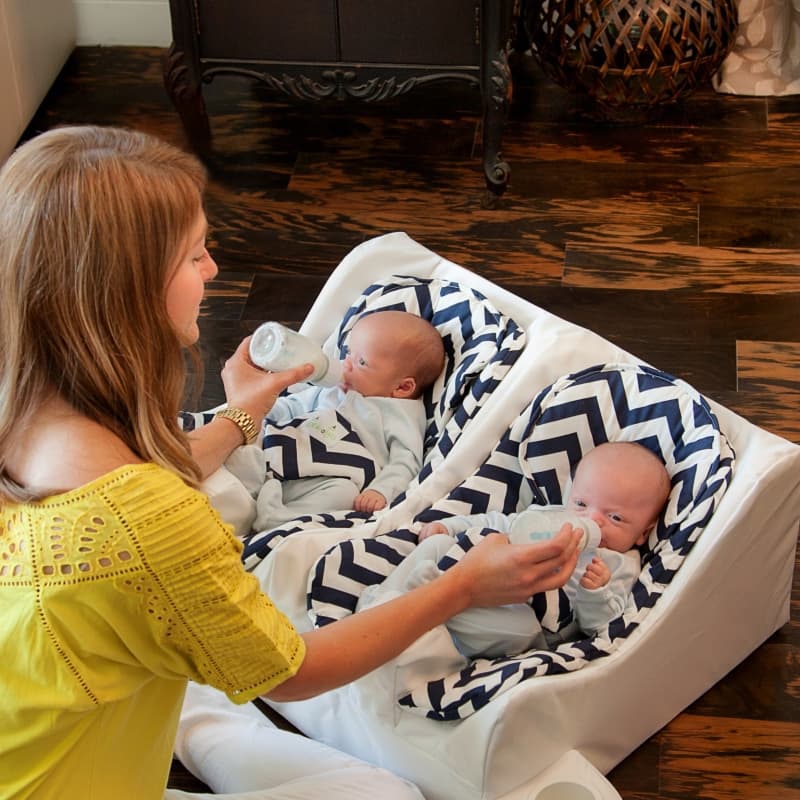
Bottle Prep Systems for Twins: Pitcher, Machine, or Manual
Making 12 to 16 bottles a day is a logistics problem, not a parenting moment. Here is how to do it fast, safely, and without losing your mind at 3am.
When you are making 12 to 16 bottles a day for two babies, bottle prep stops being a small task and becomes a recurring logistics operation. The method you choose will either save you 30 minutes a day or cost you 30 minutes a day, every day, for roughly a year. That is 180 hours. Choose wisely.
The core problem at twin volume#
A single formula-fed baby goes through 6 to 8 bottles per day. Twins go through 12 to 16. Each bottle requires measuring powder, adding water, mixing, and warming. Done individually, each bottle takes about 3 to 4 minutes. At 14 bottles a day, that is 45 to 55 minutes spent making bottles. Every single day.
At night, speed matters even more. A bottle that takes 4 minutes to prepare at 3am is 4 minutes of screaming from one or both babies. The fastest method wins at night, even if it costs more.
Method 1: The pitcher method#
Mix a full day's worth of formula in a large pitcher, store in the fridge, pour into bottles as needed. This is the most popular method among twin parents, and for good reason.
- How it works: Measure the full day's water and powder into a Dr. Brown's Formula Mixing Pitcher (or any clean pitcher with a mixing blade). Stir. Refrigerate. Pour individual bottles when needed and warm them.
- Time per day: about 10 minutes for the mix, plus 1 to 2 minutes per bottle to pour and warm. Total: roughly 25 to 35 minutes.
- Cost: the pitcher is $10 to $15. The formula cost is the same as any other method.
- Night speed: pour from the fridge, warm in a bottle warmer (90 seconds) or a mug of hot water (2 minutes). Fast enough.
The pitcher method is the baseline recommendation for most twin parents. It is cheap, reliable, and cuts prep time by about 40% compared to mixing individual bottles.
Method 2: Baby Brezza Formula Pro#
An automatic formula dispenser that measures water and powder and delivers a warm bottle in about 20 seconds. Think of it as a Keurig for formula.
- How it works: Fill the water tank and powder hopper. Press a button, select the volume. A warm, mixed bottle comes out in 20 to 30 seconds.
- Time per day: about 7 to 10 minutes total for 14 bottles. Plus 5 minutes daily for cleaning the funnel and parts.
- Cost: $200 for the machine. Ongoing formula cost is the same. Replacement funnels and cleaning are an additional $30 to $50 per year.
- Night speed: press button, wait 20 seconds. This is the fastest night-feed method available.
The Baby Brezza is polarizing. Parents who love it call it the best purchase they made. Parents who hate it cite inconsistent powder dispensing (some models over- or under-measure), cleaning hassle, and the funnel clogging with certain formula brands.
Our take: if you are fully formula feeding twins and night-feed speed is your top priority, the Brezza pays for itself in sanity. If you are combination feeding or using a specialty formula (thicker powders can clog the funnel), the pitcher method is more reliable.
Method 3: Ready-to-feed formula#
Pre-mixed liquid formula in bottles or cartons. No measuring, no mixing, no warming required (most babies accept room temperature).
- How it works: Open, pour (or attach a nipple directly to the bottle), feed.
- Time per day: about 5 minutes total. Open and pour. That is it.
- Cost: roughly 2 to 3 times the price of powdered formula. For twins, that means $300 to $500 per month instead of $150 to $250. Over a year, the premium is $1,800 to $3,000.
- Night speed: fastest possible. No warming needed. Grab, open, feed.
Ready-to-feed is the luxury option. We would never recommend it as the sole method for twins on a budget. But many twin parents keep a case on hand specifically for night feeds and for the diaper bag, while using pitcher or Brezza for daytime. The hybrid approach captures 80% of the convenience at 20% of the cost premium.
Method 4: Manual mixing, bottle by bottle#
Boil or filter water, measure powder, scoop into bottle, shake or stir, warm.
- How it works: exactly what every formula can says to do.
- Time per day: 45 to 55 minutes for 14 bottles. Each bottle is 3 to 4 minutes.
- Cost: $0 beyond the formula itself.
- Night speed: slow. 3 to 4 minutes of prep while babies scream.
Manual mixing is fine for one baby. For twins, it is a time tax that compounds daily. We would not recommend it as the primary method unless budget is extremely tight (no $15 for a pitcher).
Time and cost comparison#
At 14 bottles per day, roughly what fully formula-fed twins consume:
- Manual mixing: 50 minutes per day, $0 extra equipment, slowest nights.
- Pitcher method: 30 minutes per day, $15 equipment, moderate night speed.
- Baby Brezza: 15 minutes per day (including cleaning), $200 equipment, fastest nights.
- Ready-to-feed: 5 minutes per day, $150 to $250 extra per month, fastest nights.
For combination feeders (breast plus formula), halve the bottle counts above. The relative rankings stay the same.
Night feeds: the deciding factor#
Most twin parents optimize daytime prep for efficiency but optimize nighttime prep for speed. The 3am feed is not a moment for careful measuring. It is a race against two escalating cries.
The top night-feed setups we see from twin parents:
- Pre-pour bottles from the pitcher, store in a mini fridge in the bedroom, warm in a bedside bottle warmer. Total time: 90 seconds.
- Baby Brezza on the nightstand (yes, some parents do this). Total time: 30 seconds.
- Ready-to-feed bottles at bedside, room temperature. Total time: 15 seconds.
- Pre-measured powder in containers plus a thermos of warm water. Total time: 60 seconds. Old-school but effective.
Whatever your daytime method, have a faster night method. The two do not need to match.
Our recommendation by situation#
Tight budget, formula feeding
Pitcher method. Buy the Dr. Brown's pitcher for $12. Mix once a day. It is the highest return per dollar in twin bottle prep.
Moderate budget, formula feeding, want maximum speed
Baby Brezza for daytime. Ready-to-feed for night feeds. Total monthly premium over manual: about $60 to $80. Worth it.
Combination feeding (breast plus formula)
Pitcher method for the formula portion. You are making fewer bottles, so the Brezza's fixed cost is harder to justify. Keep a few ready-to-feed bottles for emergencies and outings.
Specialty or hypoallergenic formula
Pitcher method or manual. The Baby Brezza funnel can clog with thicker powders (Nutramigen, Alimentum). Check your formula's compatibility before buying the machine.
Related reading#
FAQ
- What is the fastest way to make bottles for twins?
- For most twin families, the pitcher method: mix a full day of formula once, refrigerate, pour and warm as needed. It cuts prep roughly 40 percent versus mixing 12 to 16 individual bottles and costs about 15 dollars. Mixing bottle by bottle costs 45 to 55 minutes a day at twin volume.
- Is the Baby Brezza worth it for twins?
- If you are fully formula feeding and night speed is the priority, yes: a warm bottle in 20 to 30 seconds is the fastest night feed available. If you are combination feeding or using thicker specialty formulas (which can clog the funnel), the pitcher method is more reliable for less money.
- How do you speed up 3am bottle feeds for twins?
- Have a night method that is faster than your day method: pre-poured pitcher bottles in a bedroom mini fridge with a bedside warmer (90 seconds), ready-to-feed bottles at room temperature (15 seconds), or pre-measured powder plus a thermos of warm water (60 seconds). The 3am feed is a race against two escalating cries.
- Is ready-to-feed formula worth the cost for twins?
- As the sole method, no: it runs 2 to 3 times the price of powder, an 1,800 to 3,000 dollar annual premium for twins. As a hybrid, yes: keep a case for night feeds and the diaper bag while running pitcher or Brezza by day. That captures most of the convenience at a fraction of the premium.
Keep reading
Related guides
Gear Guides
UPPAbaby Vista V2 vs Baby Jogger City Select 2 for Twins
Both are inline twin strollers that clear an apartment door. The Vista is nicer to push, fold, and resell. The City Select 2 gives twins two equal seats for less money.
Sep 12, 2026
Gear Guides
Best Twin Bassinets for a Shared Bedroom
Bedside bassinets, dual bassinets, and what fits when you and the babies share a room for the first six months.
Sep 12, 2026
Gear Guides
Bugaboo Donkey 5 Twin vs UPPAbaby Vista V2: Side-by-Side or Inline
The Donkey puts twins next to each other in equal seats at about 28 inches wide. The Vista stacks them at about 26 inches for far less money. Doorways and budget decide it.
Sep 11, 2026