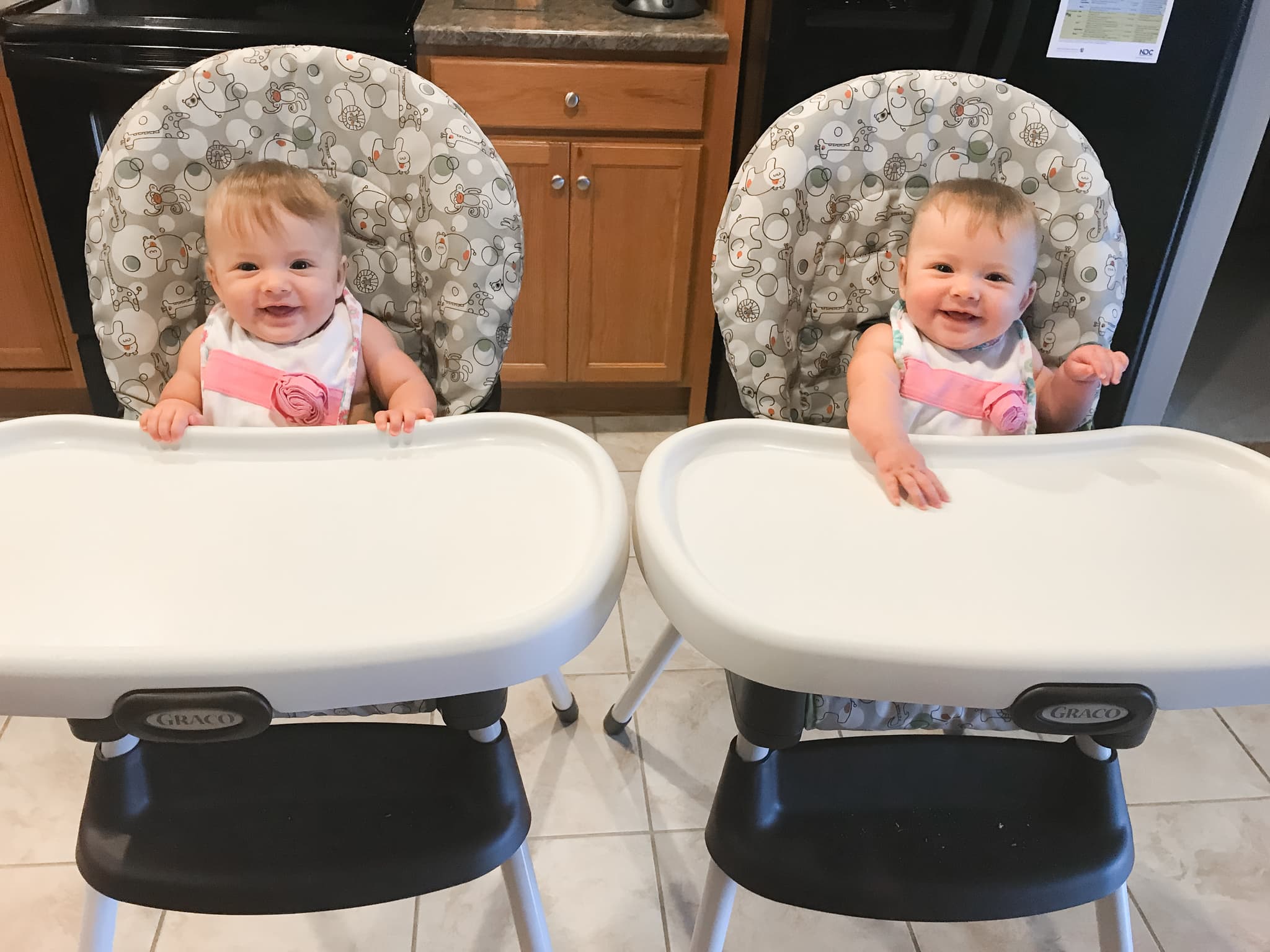
Setting Up a Solid Food Station for Twins
Feeding two babies solids simultaneously is a logistics challenge. Here is how to set up the station, manage the mess, and keep both babies engaged without losing your mind.
Somewhere around 6 months, your twins are ready for solid foods. This is exciting for about three minutes, until you realize that feeding one baby solid food is messy, and feeding two babies solid food simultaneously is a disaster scene requiring advance planning, correct equipment, and a floor covering you do not mind throwing away.
When to start (and how to know they are ready)#
AAP guidance says around 6 months for solids, but readiness signs matter more than the calendar. Both twins need to independently show:
- Sitting with support (not flopping over in a high chair).
- Loss of the tongue-thrust reflex (they do not push food out automatically).
- Interest in food (watching you eat, reaching for food).
- Good head control.
Your twins may not be ready at the same time. If one is ready at 5.5 months and the other at 6.5 months, start them separately. There is no benefit to forcing simultaneous starts.
The station setup#
The solid food station is the physical setup that makes simultaneous feeding possible without requiring three hands.
High chair placement
- Side by side, facing you. You need to reach both babies from one seated position. If the chairs are too far apart, you spend the meal swiveling and one baby always waits.
- On a hard floor or large splat mat. Carpet under high chairs is a mistake you only make once. A plastic splat mat ($15 to $20) or an old shower curtain saves your floor and your sanity.
- Near the kitchen sink. Cleanup happens immediately. The closer the chairs are to water, the faster the turnaround.
Essential gear
- Two high chairs with trays. Convertible models that grow with the babies save money long-term. IKEA Antilop ($20 each) is the most popular twin choice because it is cheap, cleanable, and replaceable.
- Two silicone bibs with food catchers. These catch roughly 40% of what does not make it to the mouth. Worth every cent at twin volume.
- Two suction bowls. Bowls that stick to the tray stay on the tray. Bowls that do not stick become projectiles.
- Two soft-tipped spoons per baby per meal. One in your hand, one for the baby to hold (and throw).
- A floor mat or splat mat under both chairs.
- A roll of paper towels within arm's reach. Not across the room. Within reach.
The simultaneous feeding workflow#
Feeding two babies at once is a rhythm, not a crisis. Here is the workflow that most twin parents converge on:
- Prep all food before putting anyone in a chair. Cut, mash, portion into two bowls. Nothing goes into the microwave while babies are seated and waiting.
- Seat both babies. Bibs on, trays on, bowls attached.
- Alternate spoons. One spoonful to Baby A, one to Baby B. While A chews, B gets loaded. The rhythm is: load, deliver, load, deliver.
- Let them self-feed alongside spoon-feeding. Finger foods (soft pieces of banana, avocado strips, steamed sweet potato) keep one baby occupied while you spoon-feed the other.
- Accept the mess. Solid feeding with twins is messy. The splat mat exists for a reason. Do not wipe faces mid-meal (it interrupts the rhythm and annoys the babies). Wipe once at the end.
Baby-led weaning with twins#
Baby-led weaning (BLW, where babies self-feed soft finger foods from the start instead of purees) works well with twins because it reduces the parent bottleneck. You are not spoon-feeding two mouths. Both babies feed themselves while you supervise.
The trade-off: BLW is messier than spoon-feeding and requires more advanced readiness (strong sitting, good pincer grasp). Many twin parents do a hybrid: purees by spoon for the first month, then gradually introduce finger foods as the babies' coordination improves.
Batch prep: the twin parent's friend#
Making individual portions of baby food for every meal is not sustainable at twin volume. Batch prep works:
- Cook large batches of two or three vegetables and one protein on the weekend.
- Portion into ice cube trays, freeze, then transfer to labeled bags.
- Each meal: defrost two to three cubes per baby. Microwave, stir, test temperature, serve.
- Total weekly prep time: 60 to 90 minutes. Total daily meal prep: 5 minutes.
Related reading#
FAQ
- How do you feed two babies solids at the same time?
- With a rhythm: prep everything before anyone is seated, then alternate spoonfuls (load Baby B while Baby A chews) and put finger foods on both trays so one baby self-feeds while you spoon the other. Wipe faces once at the end, not mid-meal. It is a workflow, not a crisis.
- What gear do you need for twin solids?
- Two cheap wipeable high chairs side by side facing you (the 20-dollar IKEA option is the twin favorite), silicone catcher bibs (they catch about 40 percent of the misses), suction bowls that cannot become projectiles, two spoons per baby (one to hold, one to use), a splat mat, and paper towels within arm's reach.
- Should twins start solids on the same day?
- Only if both are ready. The signs that matter: sitting with support, loss of the tongue-thrust reflex, interest in food, and head control, usually around 6 months. If one is ready at 5.5 months and the other at 6.5, start them separately. There is no benefit to forcing a simultaneous start.
- How do you batch-prep baby food for twins?
- Cook two or three vegetables and one protein in bulk on the weekend, freeze in ice cube trays, transfer to labeled bags, then defrost two to three cubes per baby per meal. Weekly prep runs 60 to 90 minutes; daily meal prep drops to about 5. Per-meal cooking at twin volume is not sustainable.
Keep reading
Related guides
Gear Guides
UPPAbaby Vista V2 vs Baby Jogger City Select 2 for Twins
Both are inline twin strollers that clear an apartment door. The Vista is nicer to push, fold, and resell. The City Select 2 gives twins two equal seats for less money.
Sep 12, 2026
Gear Guides
Best Twin Bassinets for a Shared Bedroom
Bedside bassinets, dual bassinets, and what fits when you and the babies share a room for the first six months.
Sep 12, 2026
Gear Guides
Bugaboo Donkey 5 Twin vs UPPAbaby Vista V2: Side-by-Side or Inline
The Donkey puts twins next to each other in equal seats at about 28 inches wide. The Vista stacks them at about 26 inches for far less money. Doorways and budget decide it.
Sep 11, 2026