Twin Budget Month by Month: How Costs Shift Through Year 1
Twin spending is not flat. It spikes at birth, peaks around month 4, and shifts dramatically as feeding, diapers, and childcare evolve. Here is the real monthly curve.
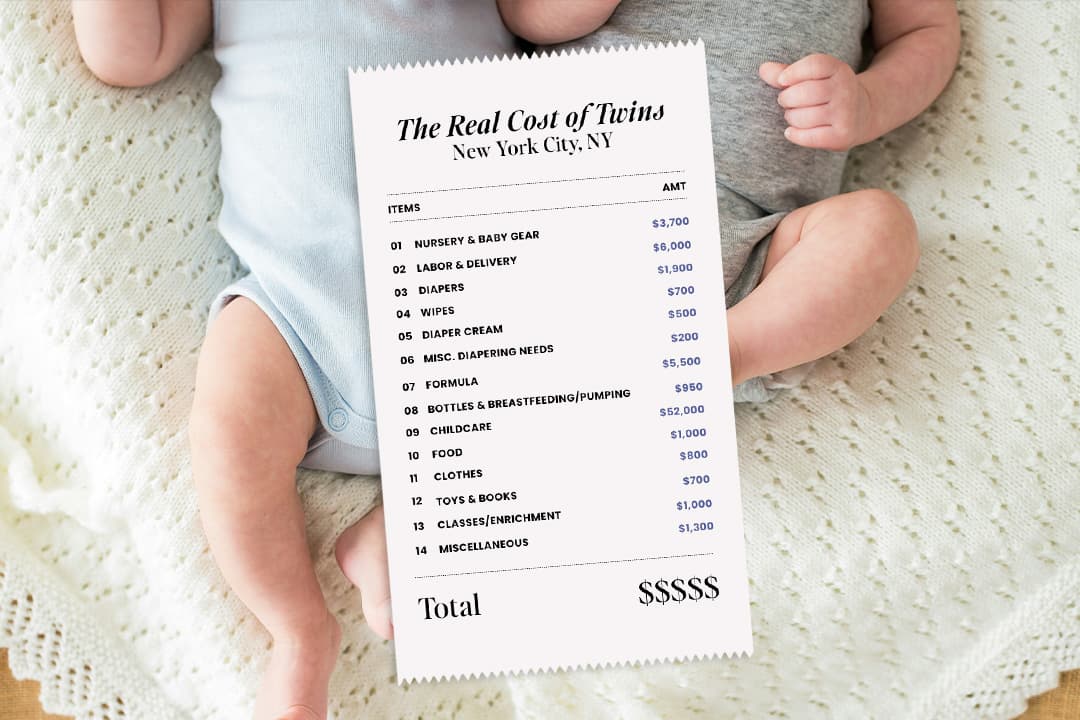
Most twin budget guides give you an annual total and call it done. That is not how spending actually works. Twin expenses are heavily front-loaded, shift in composition as the babies grow, and have a few surprise peaks that catch parents off guard. Here is what the spending curve actually looks like, month by month.
Pre-birth: the gear spike#
Before the babies arrive, you make most of your one-time gear purchases. This is the first spending spike.
- Car seats, cribs, mattresses, stroller, monitor, nursing pillow, bottles, pump: $1,500 to $4,000 depending on new vs used and brand choices.
- Clothing, swaddles, sleep sacks, linens: $200 to $500.
- Nursery setup (if applicable): $200 to $1,000.
- Hospital bag supplies, postpartum recovery items: $100 to $300.
Total pre-birth: $2,000 to $5,800. This spike is predictable and mostly one-time. Registry gifts offset a significant portion for many families.
Months 0 to 2: the consumables wave#
The first two months are dominated by consumables: diapers, formula (if not exclusively breastfeeding), and wipes. Volume is highest per pound of baby because newborns feed and soil diapers more frequently relative to their size.
- Diapers: $100 to $180 per month (10 to 14 per day combined, newborn and size 1).
- Formula (if formula-feeding): $150 to $300 per month for standard formula. Higher for specialty.
- Wipes: $25 to $40 per month.
- Miscellaneous (diaper cream, laundry detergent, extra burp cloths): $30 to $50 per month.
Monthly recurring: $300 to $570. This is the baseline that persists all year, with gradual changes in composition.
Months 3 to 4: the second gear wave#
Around month 3 to 4, several new expenses appear:
- Second-wave gear: bouncers, play mats, a possible second swing, larger clothing sizes. $100 to $400.
- Postpartum doula or night nurse (if hired): $500 to $2,000 per month. Many families use this in months 1 to 3 and stop around month 4.
- Childcare research deposits: some daycares require deposits or waitlist fees 6 to 12 months in advance. $100 to $500.
Months 3 to 4 often feel like a second spending spike because you are buying things you did not anticipate needing and possibly paying for help that is winding down.
Months 4 to 6: the childcare cliff#
For working parents, months 4 to 6 are when parental leave typically ends and paid childcare begins. This is the single largest spending shift of the year.
- Daycare for two infants: $2,600 to $7,000 per month.
- Or nanny: $2,500 to $4,500 per month.
- Or au pair: $1,500 to $2,000 per month.
- Consumables continue: $300 to $500 per month.
Total monthly: $3,000 to $7,500 if using daycare. This is the peak spending period for most dual-income twin families. It persists until the toddler transition reduces daycare rates.
Months 6 to 9: the solids transition#
Around month 6, babies start solid food. This adds a new expense category but slightly reduces formula costs.
- Baby food (store-bought): $50 to $100 per month for two. Home-made purees: $20 to $40.
- High chairs (two): $100 to $400 one-time. Often delayed from the registry until now.
- Sippy cups, feeding bowls, spoons: $30 to $60 one-time.
- Formula costs may decrease 10 to 20% as solids supplement caloric intake.
- Diaper costs shift: fewer changes per day, but larger (more expensive) diaper sizes.
Net monthly change: roughly flat. The solids cost offsets the slight formula decrease. The gear purchases are small and one-time.
Months 9 to 12: the mobility gear wave#
As twins start crawling and pulling to stand, the house needs childproofing and the gear shifts again.
- Baby-proofing: gates, outlet covers, cabinet locks, furniture anchors. $100 to $300 one-time. With twins, you need more gates (blocking two curious babies from two directions simultaneously).
- Shoes (first walking shoes): $30 to $60 per pair, two pairs. Babies who are cruising need soft-soled shoes.
- Larger clothing sizes: growth spurts accelerate. Budget $50 to $100 per month if not receiving hand-me-downs.
- Convertible car seats (if transitioning from infant seats): $150 to $400 each, $300 to $800 total. Some families delay this to 15 to 18 months.
The annual curve summarized#
For a dual-income US family using daycare, formula-feeding, and buying a mix of new and used gear:
- Pre-birth: $2,000 to $5,000 (one-time gear).
- Months 0 to 3: $400 to $600 per month (consumables, no childcare yet).
- Months 4 to 6: $3,500 to $7,500 per month (childcare begins).
- Months 6 to 12: $3,200 to $7,000 per month (childcare continues, solids added, formula decreasing).
- Year 1 total: $35,000 to $80,000. The range is wide because childcare is the dominant variable.
For a family where one parent stays home and breastfeeds, the curve is flatter: $300 to $600 per month in consumables, plus the one-time gear cost. Year 1 total: $6,000 to $12,000.
Cash flow tips#
- Front-load registry gifts to cover the pre-birth gear spike. Ask for diapers and wipes in bulk as shower gifts.
- Build a $5,000 to $10,000 buffer before birth for the unpredictable expenses: NICU copays, emergency formula, and the inevitable "we need this now" purchases at 3am.
- Time your Dependent Care FSA enrollment to start when childcare begins, not when the babies are born.
- Buy diapers one size ahead during sales. Your babies will grow into them, and the savings compound across twin volume.
- Revisit your budget at months 3, 6, and 9. The composition of spending changes faster than you expect.
What we would do#
Plan for two spending spikes (pre-birth gear and month 4 to 5 childcare start), not a flat monthly cost. Build a cash buffer for NICU and surprise expenses. Buy consumables in bulk from day one. And revisit the budget quarterly, because twin expenses change shape every few months even when the total stays similar.
Related reading#
FAQ
- When are twin expenses highest in the first year?
- Two spikes: pre-birth gear (2,000 to 5,800 dollars, one-time, partly offset by registry gifts) and months 4 to 6 when leave ends and childcare starts, jumping the monthly total to 3,000 to 7,500 dollars for daycare families. Between the spikes, consumables run a steadier 300 to 600 a month.
- How much do twins cost per month before childcare?
- Roughly 300 to 570 dollars in months 0 to 2: diapers at 100 to 180 (10 to 14 a day combined), formula at 150 to 300 if formula-feeding, wipes at 25 to 40, plus odds and ends. Composition shifts over the year but this consumables baseline persists.
- What surprise expenses hit twin parents around months 3 to 4?
- A second gear wave nobody budgets for: bouncers, play mats, bigger clothing sizes (100 to 400 dollars), the tail end of postpartum doula or night-nurse help if hired, and daycare deposits or waitlist fees collected 6 to 12 months before the spot starts.
- How do you manage twin cash flow through year one?
- Point registry gifts at the pre-birth gear spike and ask for bulk diapers as shower gifts, build a 5,000 to 10,000 dollar buffer for NICU copays and 3am purchases, start the Dependent Care FSA when childcare starts rather than at birth, buy diapers one size ahead on sale, and re-check the budget at months 3, 6, and 9.
Keep reading
Related guides
Gear Guides
UPPAbaby Vista V2 vs Baby Jogger City Select 2 for Twins
Both are inline twin strollers that clear an apartment door. The Vista is nicer to push, fold, and resell. The City Select 2 gives twins two equal seats for less money.
Sep 12, 2026
Gear Guides
Best Twin Bassinets for a Shared Bedroom
Bedside bassinets, dual bassinets, and what fits when you and the babies share a room for the first six months.
Sep 12, 2026
Gear Guides
Bugaboo Donkey 5 Twin vs UPPAbaby Vista V2: Side-by-Side or Inline
The Donkey puts twins next to each other in equal seats at about 28 inches wide. The Vista stacks them at about 26 inches for far less money. Doorways and budget decide it.
Sep 11, 2026