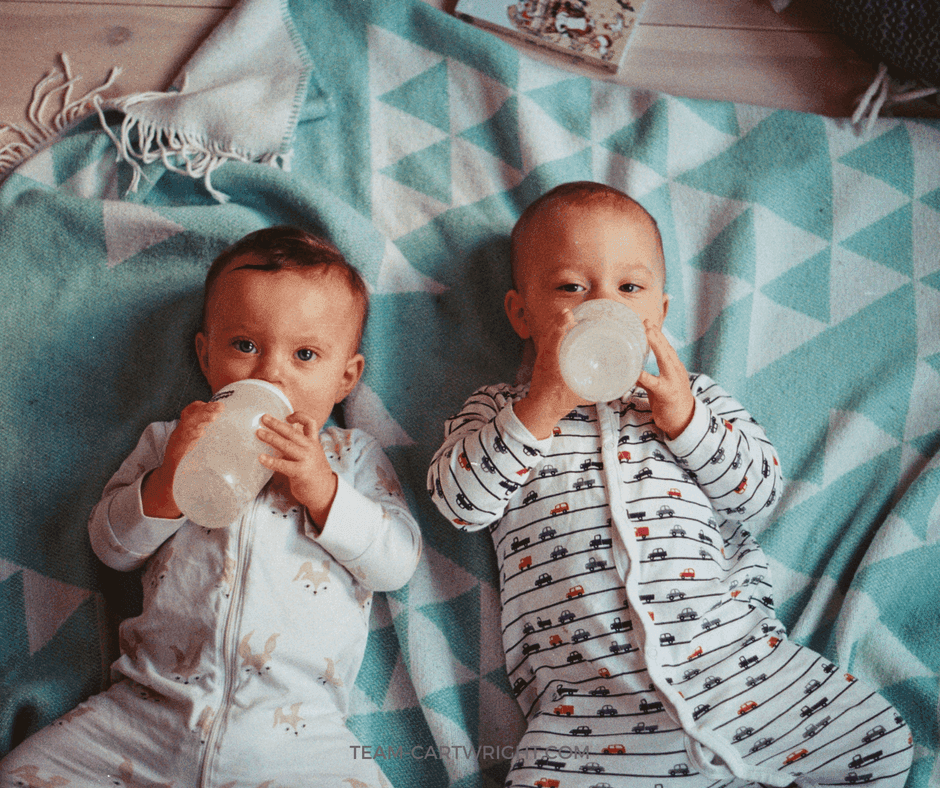
Baby-Led Weaning With Twins: Why BLW Might Be Easier Than Spoon-Feeding Two
Baby-led weaning with twins sounds chaotic. In practice, it can be simpler than spoon-feeding two babies at once. Here is how to set it up safely.
Spoon-feeding one baby is straightforward. Spoon-feeding two babies at the same time is a juggling act where both objects are moving, refusing, and spitting. Baby-led weaning (BLW), where babies feed themselves with soft finger foods from around 6 months, sounds messier. It is messier. But for twins specifically, it can be genuinely easier because both babies feed themselves while you supervise, instead of one eating while the other waits.
Why BLW can work better with twins#
The core advantage is independence. With spoon-feeding, you are the bottleneck. Two babies, one spoon-holder, and whoever is not being fed is either crying or wearing their food. With BLW, both babies have food in front of them at the same time. You sit between them and watch.
- Both babies eat simultaneously. No waiting, no fussing about turns.
- You have your hands free to supervise, which is the actual job during BLW. Your role is safety, not delivery.
- Meal prep is simpler. You cut food into strips or pieces once, divide onto two trays. No pureeing, no separate spoons, no warming different bowls.
- Twins learn from watching each other eat. One picks up a banana stick, the other copies. The social modeling effect is strong between twins.
When to start#
BLW guidelines are the same for twins as for singletons. Most babies are ready around 6 months, when they can:
- Sit upright in a high chair with minimal support.
- Bring objects to their mouth deliberately.
- Show interest in food (reaching, watching you eat).
- Have lost the tongue-thrust reflex (they stop pushing food out automatically).
Twins may hit these readiness signs at different times. If one is ready at 5.5 months and the other at 6.5 months, start the ready one and let the other watch. Watching is itself preparation. Do not rush the second twin to match.
The twin BLW setup#
You need two high chairs, a floor protector, and a tolerance for mess. That is about it.
- Two high chairs side by side, close enough that you can reach both trays. The IKEA Antilop is the most popular BLW chair for good reason: cheap, easy to clean, and the tray wipes down in seconds. Two cost less than one premium chair.
- A splat mat or old shower curtain under both chairs. BLW is messy. Protecting the floor saves cleaning time and your sanity.
- Long-sleeve bibs with a food catcher pocket for both babies. These save one full outfit change per meal.
- Your own meal. Eat with them. BLW is about family eating together. Your food is also a teaching tool.
First foods that work well for two#
Start with soft foods cut into finger-length strips (about the length of an adult finger). At 6 months, babies grab with their whole fist, so the food needs to stick out the top.
- Steamed broccoli florets (the stem is the handle).
- Banana cut in half lengthwise, with some peel left for grip.
- Avocado strips (roll in breadcrumbs if too slippery).
- Steamed sweet potato sticks.
- Strips of well-cooked toast with a thin spread of nut butter.
- Soft-cooked pasta (fusilli is easy to grip).
Cook once, cut twice. Batch prep is your friend. Steam a large tray of vegetables once, divide into portions for 2 to 3 meals, refrigerate or freeze. BLW meal prep for twins takes about 15 minutes if you batch it.
Safety rules (the same for twins, but harder to enforce)#
BLW safety with twins requires extra vigilance because you are watching two babies at once. The rules are non-negotiable:
- Both babies must be upright in a high chair. Never BLW in a bouncer, on a lap, or reclined.
- You must be within arm's reach of both babies at all times during eating. Sit between the high chairs.
- Know the difference between gagging (normal, noisy, self-correcting) and choking (silent, requires intervention). Take an infant CPR course before starting BLW. This is not optional.
- No whole grapes, cherry tomatoes, raw carrots, popcorn, hard nuts, or whole sausage rounds. These are choking hazards at any age under 4.
- No distractions. No phone, no TV, no cooking at the stove while they eat. Your job is to watch.
The mess question#
BLW with twins is messy. There is no avoiding this. Two babies throwing food is more than twice the mess of one, because they throw at each other, not just on the floor.
- Accept the mess as a developmental stage, not a permanent state. It peaks around 7 to 9 months and improves as coordination develops.
- Strip to diaper plus bib in warm weather. One less thing to wash.
- Clean up once after the meal, not during. Wiping mid-meal frustrates the baby and extends the chaos.
- Let the dog help (if your dog is well-behaved around babies). This is the one parenting hack that genuinely reduces floor cleanup.
When BLW does not work for twins#
BLW is not the right fit for every twin pair. Consider spoon-feeding or a combined approach if:
- One or both twins were significantly premature and have delayed oral motor skills. Check with your pediatrician.
- One twin has a medical condition affecting swallowing or coordination.
- You genuinely cannot be within arm's reach of both babies during meals (solo parent with a third child who also needs attention).
- The stress of watching two babies gag is too high for you. Gagging is normal but watching it twice at once is genuinely anxiety-inducing for some parents. A mixed approach (some BLW, some spoon-feeding) is completely valid.
Related reading#
FAQ
- Does baby-led weaning work with twins?
- Often better than spoon-feeding, because it removes the bottleneck: with a spoon you feed one baby while the other cries or wears their food; with BLW both babies feed themselves simultaneously while you sit between the high chairs supervising. Twins also copy each other, and the modeling effect is strong.
- When can twins start baby-led weaning?
- Same readiness signs as singletons, usually around 6 months: sitting upright with minimal support, bringing objects to the mouth deliberately, showing interest in food, and losing the tongue-thrust reflex. Twins often hit readiness at different times; start the ready one and let the other watch. Do not rush the second to match.
- What are the BLW safety rules with twins?
- Both babies upright in high chairs (never reclined or on a lap), you within arm's reach of both at all times, an infant CPR course before starting (know gagging, which is noisy and normal, from choking, which is silent), no whole grapes, cherry tomatoes, raw carrot, popcorn, or nuts, and no phone or stove while they eat.
- What setup do you need for BLW with twins?
- Two easy-clean high chairs side by side (two cheap wipeable chairs beat one premium), a splat mat or old shower curtain under both, long-sleeve catcher bibs, and your own meal, because eating together is the teaching. Batch-steam vegetables once for 2 to 3 meals; twin BLW prep runs about 15 minutes when batched.
Keep reading
Related guides
Gear Guides
UPPAbaby Vista V2 vs Baby Jogger City Select 2 for Twins
Both are inline twin strollers that clear an apartment door. The Vista is nicer to push, fold, and resell. The City Select 2 gives twins two equal seats for less money.
Sep 12, 2026
Gear Guides
Best Twin Bassinets for a Shared Bedroom
Bedside bassinets, dual bassinets, and what fits when you and the babies share a room for the first six months.
Sep 12, 2026
Gear Guides
Bugaboo Donkey 5 Twin vs UPPAbaby Vista V2: Side-by-Side or Inline
The Donkey puts twins next to each other in equal seats at about 28 inches wide. The Vista stacks them at about 26 inches for far less money. Doorways and budget decide it.
Sep 11, 2026