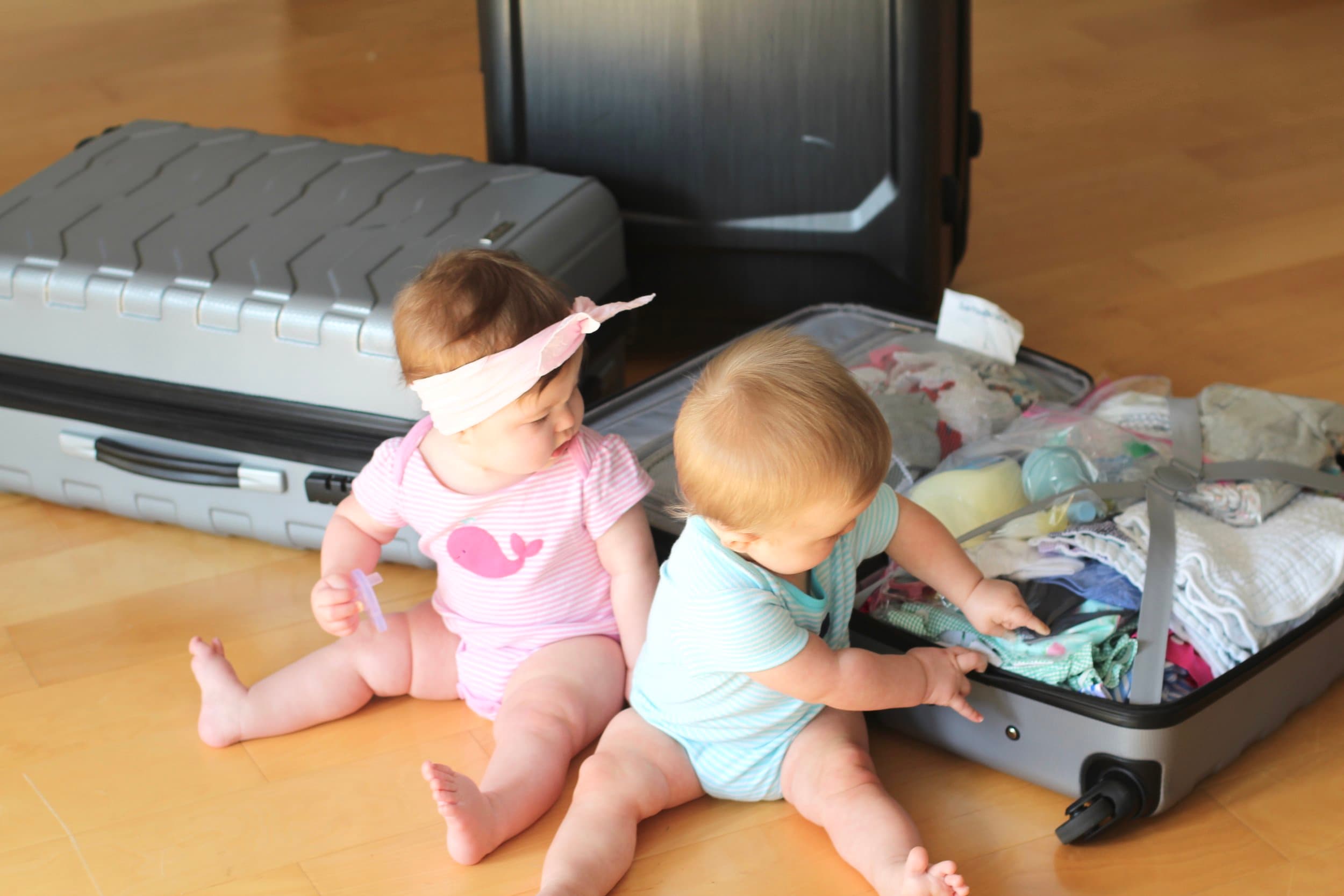
Road Tripping With Twins: Packing, Timing, and Pit Stops
A practical road trip playbook for twin parents. What to pack, when to leave, how often to stop, and why two car seats change every calculation.
Road trips with twins are not twice as hard as road trips with one baby. They are differently hard. The packing is heavier, the timing is tighter, and pit stops take twice as long. But with a plan, a 4 to 8 hour drive is genuinely manageable, even with two babies under a year.
When to leave#
The single biggest decision is departure time. Get this right and the rest of the trip is smoother. Get it wrong and you will remember the screaming for years.
- The naptime launch. Leave 30 minutes before the first nap of the day. Both babies fall asleep in the car and you get 60 to 90 minutes of quiet driving. This is the gold-standard strategy for trips under 4 hours.
- The bedtime launch. For longer drives (5+ hours), leave at bedtime. Drive through the night while the babies sleep. One parent drives, one sleeps in the passenger seat. Arrive exhausted but with calm babies.
- The morning launch. Leave right after the first feed of the day. Babies are fed, changed, and reasonably content for 90 minutes. Best for short trips (under 3 hours).
- What to avoid: leaving mid-afternoon, when both babies are overtired and neither will sleep in the car. This window (roughly 2pm to 4pm) is the danger zone.
Packing for two car seats#
Two rear-facing car seats eat your back row. The adult who usually sits between them is gone. That changes the packing math.
- No one can sit in the back to comfort babies. Accept this. Mount a mirror on each headrest so you can see both faces from the front. A phone mount with a baby monitor app is a fallback if mirrors don't work.
- Everything you need mid-drive must be within the front passenger's reach: burp cloths, pacifiers, a pre-made bottle in a cooler bag, a change of onesie for each baby.
- The trunk holds the stroller, diaper bag, and luggage. Pack the diaper bag last so it comes out first at every stop.
- Bring one extra outfit per baby per 3 hours of drive time. Blowouts on the road are messy and there is no laundry.
The pit stop protocol#
With one baby, pit stops are quick. With twins, they are a 20 to 30 minute operation. Plan for this.
- Stop every 90 to 120 minutes. Newborns should not stay in car seats longer than 2 hours at a stretch per most pediatric guidance. Plan your route around rest stops or gas stations with enough space to lay out a blanket.
- One parent takes one baby. Change, feed, stretch, reload. Then swap. Serial is faster than parallel when you only have one changing surface.
- Bring a portable changing pad. Rest stop changing tables are unreliable, and many men's restrooms don't have them. The car trunk with a folded blanket works as a backup.
- Feed both babies at the same stop, even if only one is hungry. If you feed just one and leave, the other will be hungry 30 minutes later.
The gear that earns its space#
- A cooler bag with pre-made bottles or ready-to-feed formula. The fastest pit stop is the one where bottles are already made.
- A white noise app on a phone or a portable machine clipped to the headrest. Road noise helps, but sometimes isn't enough.
- Clip-on car seat toys. One per seat. Rotation matters more than quantity; swap toys at each stop.
- Window shades on both rear windows. Sun in the eyes wakes sleeping babies.
- A double stroller that unfolds fast. At rest stops, you need both babies out of the car and contained quickly.
What to leave at home#
- The full diaper bag. Repack a small drive-day bag with just diapers, wipes, two outfits, and cream. Leave the main bag in the trunk.
- Toys that make noise. You will hear that crinkle toy 400 times. Choose silent ones.
- Ambitious itineraries. A 6 hour drive with twins takes 8. Accept the math and don't promise arrival times.
Overnight trips: the hotel question#
If your drive requires an overnight stop, book a hotel with a suite or at minimum a room large enough for two travel cribs. The Pack 'n Play footprint is about 28 by 40 inches each, so you need roughly 20 square feet of free floor space for two.
- Call the hotel and ask if they have two cribs available. Many only stock one. Bring your own travel crib as insurance.
- Request a ground-floor room so you don't carry two babies, two cribs, and luggage up stairs at midnight.
- Stick to the home bedtime routine as closely as possible: same sleep sacks, same white noise, same sequence.
The long view#
The first road trip with twins feels impossible. The second is hard. By the third, you have a system and it is just driving. Most twin parents we know say the breakthrough happens around trip three, when the packing list is memorized and the timing is dialed in. Give yourself grace on the first one. It gets better fast.
Related reading#
FAQ
- When should you start a road trip with twins?
- Time the launch to sleep: leave 30 minutes before the first nap for trips under 4 hours (60 to 90 minutes of quiet driving), or at bedtime for 5-plus hour drives with one parent driving and one resting. Never leave mid-afternoon; the 2pm-to-4pm overtired window is the danger zone.
- How often do you stop on a road trip with twins?
- Every 90 to 120 minutes. Pediatric guidance caps newborn car seat time around 2 hours per stretch, and a twin pit stop is a 20 to 30 minute operation: one parent per baby, change and feed serially, and feed both even if only one is hungry, or the other will be hungry 30 minutes down the road.
- What gear makes twin road trips easier?
- A cooler bag of pre-made bottles or ready-to-feed formula (the fastest pit stop is one with bottles already made), a mirror on each headrest so the front passenger sees both faces, window shades on both sides, silent clip-on toys rotated at each stop, and a stripped-down drive-day diaper bag packed to come out of the trunk first.
- How much longer do road trips take with twins?
- Plan for a 6-hour drive to take 8. The stops are longer, the schedule is real, and promised arrival times are how the trip goes wrong. Most twin parents say the system clicks around trip three; give yourself grace on the first one.
Keep reading
Related guides
Survival
Should Twins Be in the Same Class or Separate? What the Research Says
Every twin parent faces this question by age 4 or 5. Schools often have a default policy. The research says the answer depends on your specific twins, not a blanket rule.
Sep 11, 2026
Survival
Twin Childcare: Daycare vs Nanny vs Nanny Share vs Au Pair
Childcare is the single largest twin expense. Here is what each option actually costs, when each makes sense, and the hidden costs most guides skip.
Sep 11, 2026
Survival
NICU Survival Guide for Twin Parents
About half of twins spend time in the NICU. It is scary, it is common, and it usually ends well. Here is what to expect, what to pack, and how to get through it.
Sep 11, 2026