
One Twin Cries and Wakes the Other: A Fix-It Guide
Sound separation, sleep timing, and the white-noise setup that breaks the cry-cascade.
It's 3am. One twin starts crying. Forty seconds later, the other twin starts crying. You now have two crying babies instead of one. Welcome to the cry-cascade, the most demoralizing single phenomenon of twin parenthood.
Good news: it's mostly fixable, mostly with white noise and small layout adjustments. The fix is not behavioral. It's environmental.
Why this happens (and why it stops)#
Newborns sleep light. Their brains are still building the gating systems that filter ambient noise during sleep. A sibling crying inches away is exactly the kind of stimulus that wakes them.
By around 12 to 16 weeks, most babies have built enough auditory gating to sleep through low-to-moderate noise. The cry-cascade tends to fade naturally then, even without intervention.
White noise: brand, volume, placement#
White noise is the highest-leverage fix. It works because it raises the ambient noise floor, which makes the cry sound less like a sudden new stimulus and more like "ongoing room noise".
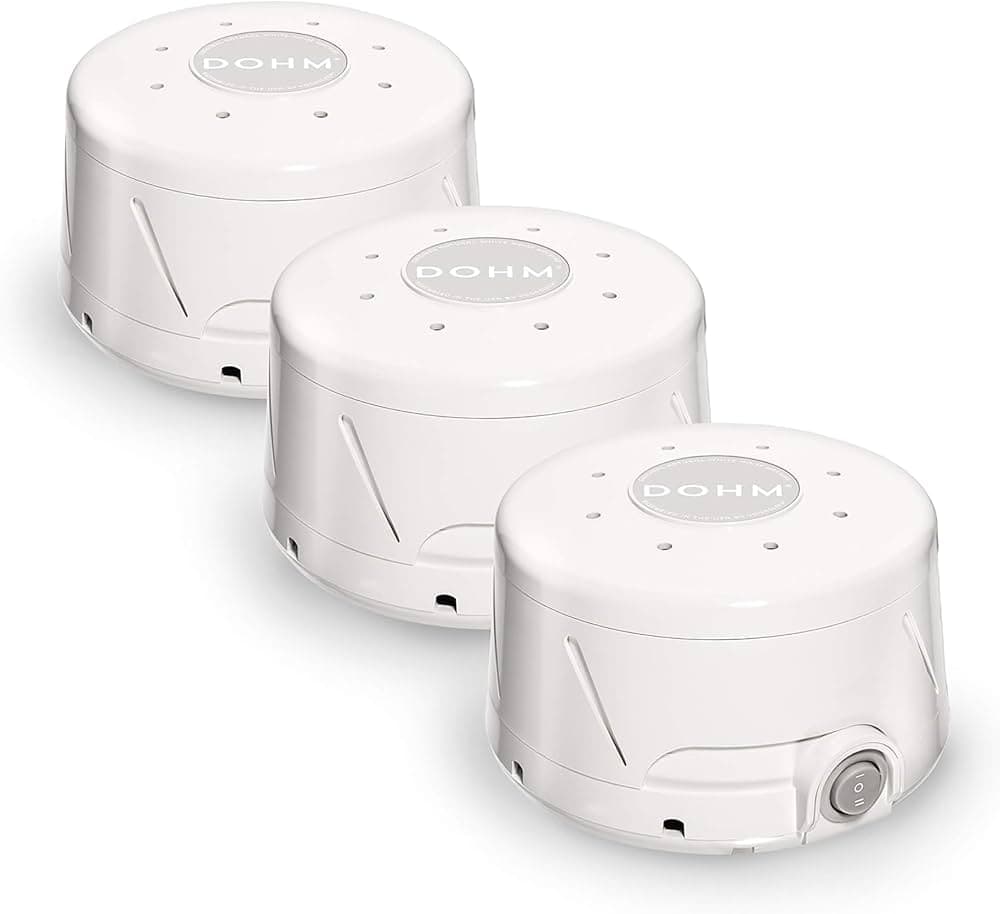
- Brand: any continuous noise machine works. Hatch Rest, Yogasleep Dohm, LectroFan, or a phone app on a dedicated old phone all work. Avoid machines with intermittent or musical patterns.
- Volume: 50 to 60 dB at the crib (about as loud as a quiet shower from a few rooms away). Use a phone app to measure. Above 65 dB is too loud and risks hearing impact over time.
- Placement: between the cribs, ideally at crib height, ideally pointing toward the cribs. The goal is to mask sounds coming from the other crib.
- Continuous: leave it on for the whole sleep period. Don't auto-off after 30 minutes; that's when the cascade happens.
Sleep timing offsets#
If both babies go down at the same time, both wake at the same time, both feed at the same time, the cascade is muted. Their wake-ups are simultaneous, not sequential.
Counter-intuitively, the worst case is when one baby is in deep sleep and the other is in light sleep at the moment of crying. Synced sleep states reduce cascades. So: keep them on the same schedule, even if they protest a few times in the first weeks.
Room layout and physical separation#
Layout decisions, from most to least effective:
- Cribs on opposite walls. Adds 6 to 8 feet of distance. Helps a lot.
- Cribs head-to-head with white noise machine between them. Adds 2 to 3 feet of buffer plus masking.
- Cribs with a piece of furniture (dresser, bookshelf) between them. Adds physical sound absorption.
- Cribs side-by-side. Most common, most cascades. Default to one of the above if your room allows.
Some twin parents put one baby in a separate room temporarily for the worst stretch. This is fine if your safe-sleep setup supports it (monitor, smoke detection, room temp control). It's a tactic, not a long-term commitment.
When to stop trying to prevent it#
Around week 12 to 16, the cascades fade naturally. By month four, most twin parents notice that one twin can cry and the other will sleep right through. At that point, stop optimizing for prevention and start optimizing for fast response: closer monitor, faster pickup, less attempt to keep the second one down.
Trying to prevent a cascade in month five is usually wasted effort. The auditory gating has built; if the cascade still happens, something else is going on (illness, sleep regression, schedule misalignment).
What we'd do#
Two white noise machines, one in each baby's crib zone, set to 50-60 dB, on continuously. Cribs with at least 4 feet of separation if your room allows. Same sleep schedule. By month four, the cascade fades on its own. The first three months are the hard months. The fix is mostly environmental, not behavioral, and the babies' developing brains do most of the work.
Related reading#
Mentioned in this guide
Featured picks
Some buy links earn us a small cut, at no extra cost to you. We still recommend skipping plenty of things, so it balances out.
FAQ
- How do you stop one twin from waking the other?
- The fix is environmental, not behavioral: continuous white noise at 50 to 60 dB positioned between the cribs, at least 4 feet of crib separation if the room allows, and the same sleep schedule for both babies. Synced sleep states cascade far less than one twin in deep sleep next to one in light sleep.
- What white noise setup works for twins?
- Any continuous machine works (avoid intermittent or musical patterns). Set it to 50 to 60 dB at the crib, about a quiet shower from a few rooms away, and measure with a phone app since above 65 dB risks hearing impact. Place it between the cribs at crib height, and leave it on all night. The 30-minute auto-off is exactly when cascades happen.
- When do twins stop waking each other up?
- Around 12 to 16 weeks, as their brains build the auditory gating that filters ambient noise during sleep. By month four most parents see one twin cry straight through the other's noise. At that point stop optimizing prevention and optimize fast response instead: closer monitor, quicker pickup.
- Should you separate twins into different rooms when one keeps waking the other?
- As a temporary tactic during the worst stretch, yes, if your safe-sleep setup supports it (monitor, smoke detection, room temperature control). It is a tool, not a long-term commitment. Within the same room, opposite walls beat side-by-side, and a dresser between cribs adds sound absorption.
Keep reading
Related guides
Survival
Should Twins Be in the Same Class or Separate? What the Research Says
Every twin parent faces this question by age 4 or 5. Schools often have a default policy. The research says the answer depends on your specific twins, not a blanket rule.
Sep 11, 2026
Survival
Twin Childcare: Daycare vs Nanny vs Nanny Share vs Au Pair
Childcare is the single largest twin expense. Here is what each option actually costs, when each makes sense, and the hidden costs most guides skip.
Sep 11, 2026
Survival
NICU Survival Guide for Twin Parents
About half of twins spend time in the NICU. It is scary, it is common, and it usually ends well. Here is what to expect, what to pack, and how to get through it.
Sep 11, 2026