How to Set Up Two Cribs in One Room
Layouts, monitors, lighting, and white-noise decisions for room-sharing twins. What's safe, what's optional, and what to skip.
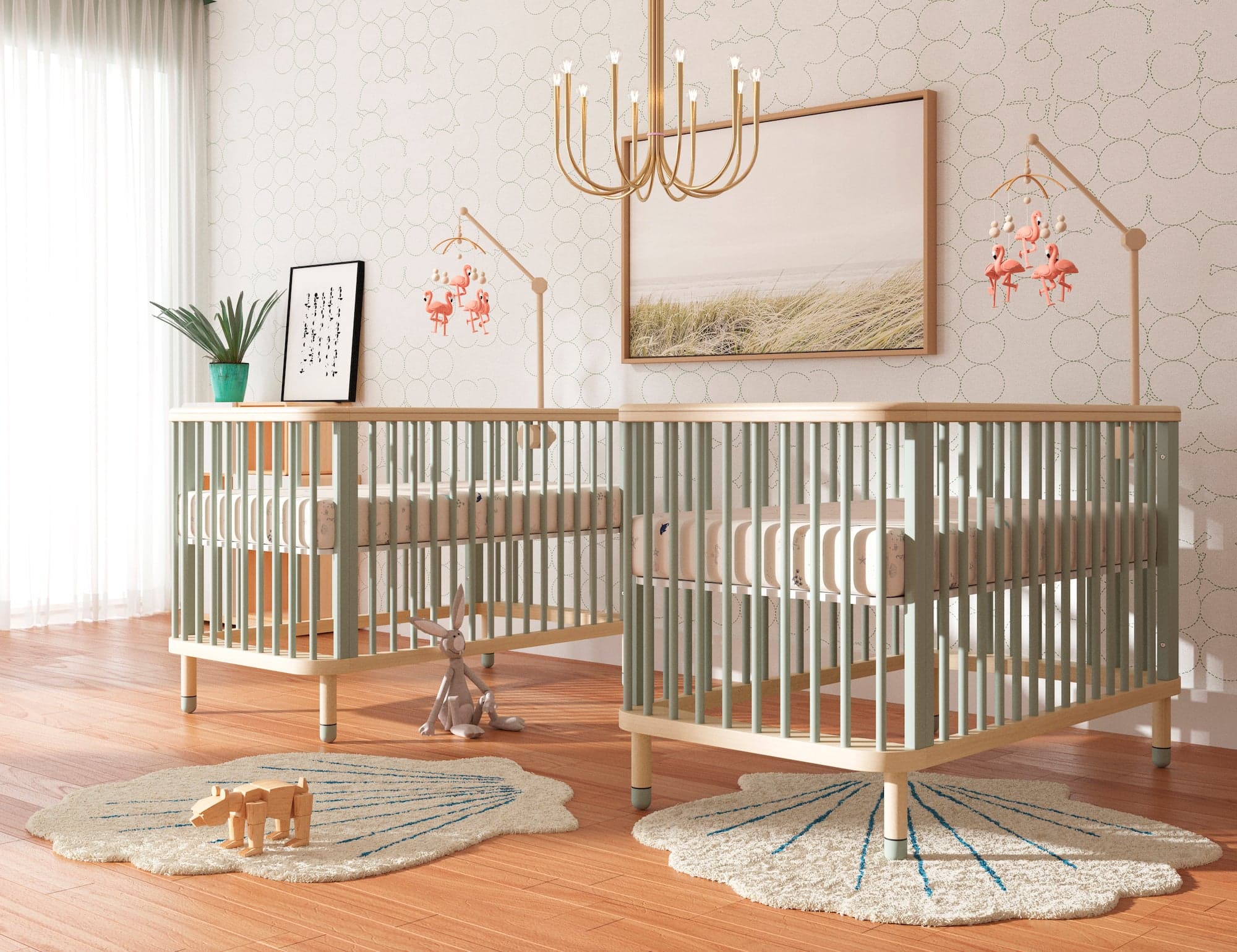
Most twin parents room-share with both babies for at least the first 6 months. AAP, NHS, and basic logistics all agree. The question is how. Two cribs in one room can be tight, cozy, or chaotic depending on layout.
Why room-sharing makes sense#
Pediatric guidance recommends room-sharing (not bed-sharing) for the first 6 months. It reduces SIDS risk and makes night feeds physically easier. For twins, it also keeps the two on a roughly synced schedule. When one wakes, you can tend to both.
Most twin parents extend room-sharing to 9–12 months because separating cribs in a small home isn't trivial.
Three layout patterns#
Side-by-side
Two cribs against the same wall, touching or with a small gap. Pros: simple, mirrors a “twin bed” setup, leaves the rest of the room intact. Cons: the babies can see each other early, which can mean they wake each other up. Some parents add a small visual barrier.
Foot-to-foot
Two cribs along opposite walls, each baby's feet pointing toward the other. Pros: maximum visual separation, can reduce wake-each-other-up effect. Cons: requires a longer room and more floor space.
L-shape
One crib against one wall, the second crib against the perpendicular wall. Pros: fits awkwardly-shaped rooms. Cons: harder to navigate at 3 AM in the dark.
Pick whichever fits the room you actually have. Don't move walls.
The decisions that matter#
Beyond layout, the three setups twin parents tweak:
- One white noise machine, centered, vs two (one per crib). One is usually enough; two can over-mask one another's cries.
- A single overhead night light (warm, dim, not changing colors) vs two cribside lights. Single is usually less disruptive.
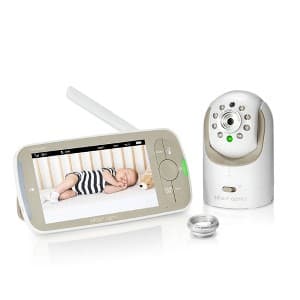
- Monitor placement: one camera covering both cribs is simpler than two cameras. Owlet Cam, Nanit Pro, or Eufy Spaceview Pro all work paired. A single dual-camera bundle (Vtech, Infant Optics) is cheaper.
What to skip#
- Crib mobiles. Not necessary, can be stimulating at the wrong moment. AAP recommends removing by 5 months anyway.
- Bumper pads. Banned in the US since 2022 for safety reasons. Don't.
- Bedding sets. Cribs should be empty: fitted sheet, baby in a sleep sack, that's it.
- Stuffed animals in the crib. Same reason. Empty crib for the first year.
A note on twin sleep proximity#
Some twin parents start with both babies in one crib, a practice called co-bedding. AAP does not recommend this beyond the first few weeks; SIDS risk rises with shared sleep surface. Most NICUs co-bed twins in their first days for thermal regulation and bonding, but transition out before discharge. Once home, separate cribs are the recommended default.
If your twins seem inconsolable when separated, you can keep the cribs touching with the side rails between them. They'll get the proximity signal without sharing a sleep surface.
The room itself doesn't need to be a “nursery” with theme decor. It needs to be safe, dim, quiet, and easy to navigate at 3 AM. That's it.
Related reading#
Mentioned in this guide
Featured picks
Some buy links earn us a small cut, at no extra cost to you. We still recommend skipping plenty of things, so it balances out.
FAQ
- Can twins share a room?
- Yes, and most twin parents room-share with both babies for at least the first 6 months, which matches AAP and NHS guidance (room-sharing, not bed-sharing). It reduces SIDS risk, makes night feeds physically easier, and keeps the pair roughly synced. Many families extend to 9 to 12 months.
- Can twins sleep in the same crib?
- Not beyond the first few weeks. Co-bedding is common in NICUs for a few days, but AAP guidance is one baby per sleep surface once home. If your twins hate separation, keep the two cribs touching with the side rails between them. They get the proximity without sharing a surface.
- How do you arrange two cribs in one room?
- Three patterns work: side-by-side on one wall (simple, but they can see and wake each other), foot-to-foot on opposite walls (best visual separation, needs a longer room), or an L-shape for awkward rooms. Pick whichever fits the room you actually have and keep it navigable in the dark.
- Do you need two white noise machines for room-sharing twins?
- Usually not. One machine, centered between the cribs, is enough; two can over-mask one another. Same logic for lighting: a single warm, dim night light beats two cribside lights. Spend instead on one camera setup that covers both cribs.
Keep reading
Related guides
Survival
Should Twins Be in the Same Class or Separate? What the Research Says
Every twin parent faces this question by age 4 or 5. Schools often have a default policy. The research says the answer depends on your specific twins, not a blanket rule.
Sep 11, 2026
Survival
Twin Childcare: Daycare vs Nanny vs Nanny Share vs Au Pair
Childcare is the single largest twin expense. Here is what each option actually costs, when each makes sense, and the hidden costs most guides skip.
Sep 11, 2026
Survival
NICU Survival Guide for Twin Parents
About half of twins spend time in the NICU. It is scary, it is common, and it usually ends well. Here is what to expect, what to pack, and how to get through it.
Sep 11, 2026