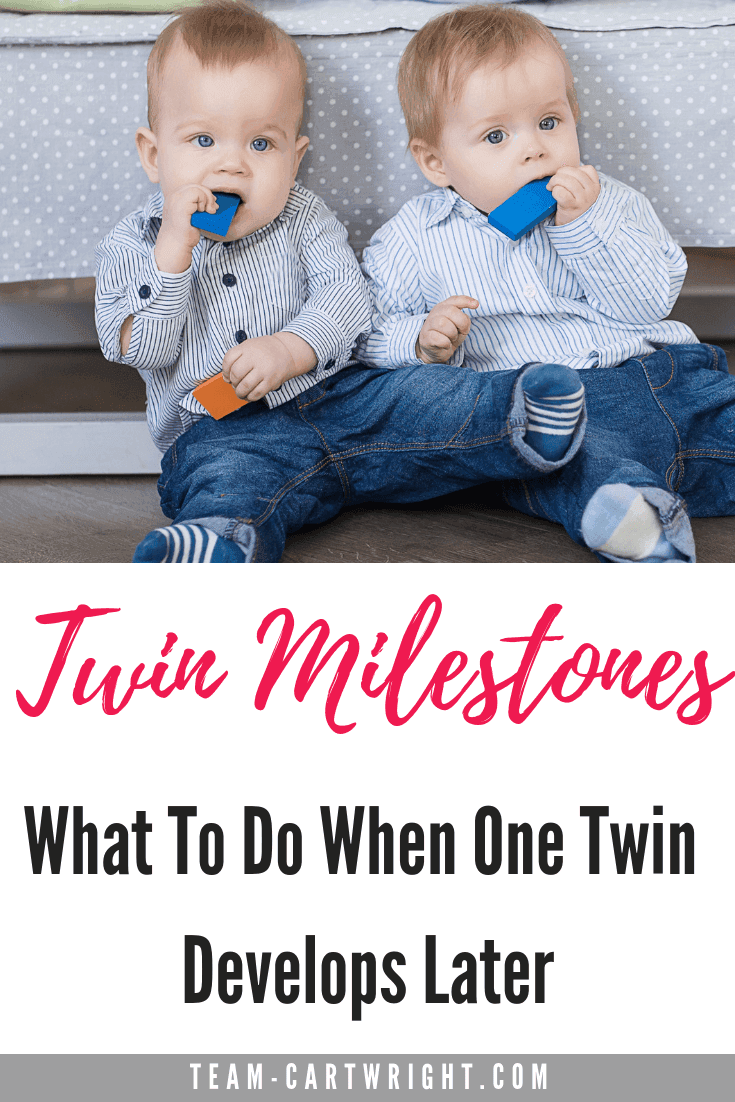
When Twins Hit Milestones at Different Times: How to Celebrate One Without Crushing the Other
One twin rolls first, walks first, talks first. The gap is normal. How you handle it shapes how your twins see themselves.
It starts early. One twin rolls over at 4 months. The other does not roll until 5.5 months. You celebrate the first and then feel a quiet, complicated anxiety about the second. This pattern repeats for crawling, walking, first words, potty training, reading, and every other milestone your children will hit for the next 18 years. The gap is almost always normal. How you react to it is the part that matters.
Why milestones diverge (even for identical twins)#
Developmental milestones are not fixed dates. They are ranges. Rolling happens between 3 and 6 months. Walking happens between 9 and 18 months. First words happen between 10 and 18 months. Two children of the same age, even with identical DNA, will land at different points in those ranges because:
- Temperament. A cautious baby takes longer to attempt new skills. A bold baby tries sooner, sometimes before they are physically ready.
- Birth weight and size. The larger twin may have a slight motor advantage early on, though this evens out by toddlerhood.
- NICU time. If one twin spent longer in the NICU, their corrected age may differ from the other's.
- Practice opportunity. The twin who spends more time on the floor may roll first simply because they had more tummy time.
- Individual neurology. Even identical twins show small differences in brain development timing.
A 2-to-4-month gap between twins on any given milestone is completely normal. A 6-month-plus gap is worth discussing with your pediatrician, not because it is automatically a problem, but because it warrants a check.
The celebration problem#
When your first twin walks, you want to cheer. You should cheer. The problem arises when that celebration becomes a comparison, either from you, from relatives, or from the babies' own emerging awareness.
Three guidelines that help:
- Celebrate the milestone, not the order. "You are walking!" is better than "You walked first!" There is no prize for going first, and framing it as a race creates a race.
- Do not narrate the gap. "Your sister walked two months before you" is a statement that only hurts. The second twin does not know or care about the timeline. You are adding meaning that does not need to exist.
- Redirect relatives. Grandparents and well-meaning friends will notice and comment. A simple "they are on their own schedules" repeated consistently trains the family.
What your twins actually perceive#
Under 18 months, twins have very limited awareness of comparative milestones. They are not tracking who walked first. The anxiety about the gap is almost entirely yours at this stage.
Between 18 months and 3 years, awareness grows. One twin may notice that the other can do something they cannot. This is where your language matters most. "You will do it when you are ready" and "your body is learning" are simple scripts that frame development as personal, not competitive.
After age 3, twins become acutely aware of differences. Academic milestones (reading, writing, counting) create visible classroom gaps. This is where the "no comparing" habit you built early pays off.
When the gap is actually concerning#
Most gaps close on their own. But a few patterns warrant professional attention:
- One twin is not meeting milestones even after correcting for prematurity, while the other is on track.
- The gap is widening over time rather than narrowing.
- One twin has lost a previously acquired skill (stopped babbling, stopped walking).
- You notice asymmetry (one side of the body working differently from the other).
In any of these cases, talk to your pediatrician. Early evaluation does not mean something is wrong. It means you are paying attention.
A note on your own feelings#
Twin parents carry a unique form of comparison anxiety that singleton parents do not experience. Watching two children develop side by side, with one appearing to "fall behind," triggers protective instincts that are hard to override with logic. It is okay to feel worried. It is also okay to let the worry go once your pediatrician says both children are within normal range.
The goal is not to make your twins develop at the same pace. They will not. The goal is to make each child feel that their pace is their own, and that it is enough.
Related reading#
FAQ
- Is it normal for twins to hit milestones at different times?
- Completely, even for identical twins. Milestones are ranges, not dates (walking spans 9 to 18 months), and temperament, birth weight, NICU time, floor-time practice, and individual neurology all shift the landing point. A 2 to 4 month gap is normal; a 6-month-plus gap earns a pediatrician conversation, as a check rather than an alarm.
- How do you celebrate one twin's milestone without hurting the other?
- Celebrate the milestone, not the order: "you are walking!" rather than "you walked first!" Never narrate the gap ("your sister walked two months before you" only hurts), and train the relatives with one repeated line: "they are on their own schedules."
- Do twins notice who does things first?
- Not under 18 months; the scoreboard anxiety at that stage is entirely yours. Awareness grows from 18 months to 3 years, which is when scripts like "you will do it when you are ready" matter, and after 3 they are acutely aware, especially of classroom gaps. The no-comparing habit you build early is what pays off then.
- When is a milestone gap between twins actually concerning?
- Four patterns: one twin missing milestones even after correcting for prematurity while the other is on track, a gap that widens instead of narrows, loss of a previously acquired skill, or body asymmetry (one side working differently). Any of those earns a pediatrician visit; early evaluation means attention, not diagnosis.
Keep reading
Related guides
Survival
Should Twins Be in the Same Class or Separate? What the Research Says
Every twin parent faces this question by age 4 or 5. Schools often have a default policy. The research says the answer depends on your specific twins, not a blanket rule.
Sep 11, 2026
Survival
Twin Childcare: Daycare vs Nanny vs Nanny Share vs Au Pair
Childcare is the single largest twin expense. Here is what each option actually costs, when each makes sense, and the hidden costs most guides skip.
Sep 11, 2026
Survival
NICU Survival Guide for Twin Parents
About half of twins spend time in the NICU. It is scary, it is common, and it usually ends well. Here is what to expect, what to pack, and how to get through it.
Sep 11, 2026