Identical vs Fraternal Twins: What Actually Changes for Parenting
The genetic difference matters less than parents expect, but it changes a few specific things. Chorionicity, individuation, comparison, and how the world treats your kids.
Most parenting advice for "identical twins vs fraternal twins" overstates the difference. Day-to-day, your twins will behave differently because they're different people, not because of zygosity. But there are a few specific things that genuinely diverge, and a few that famously don't.
First, what zygosity actually means#
Identical (monozygotic) twins
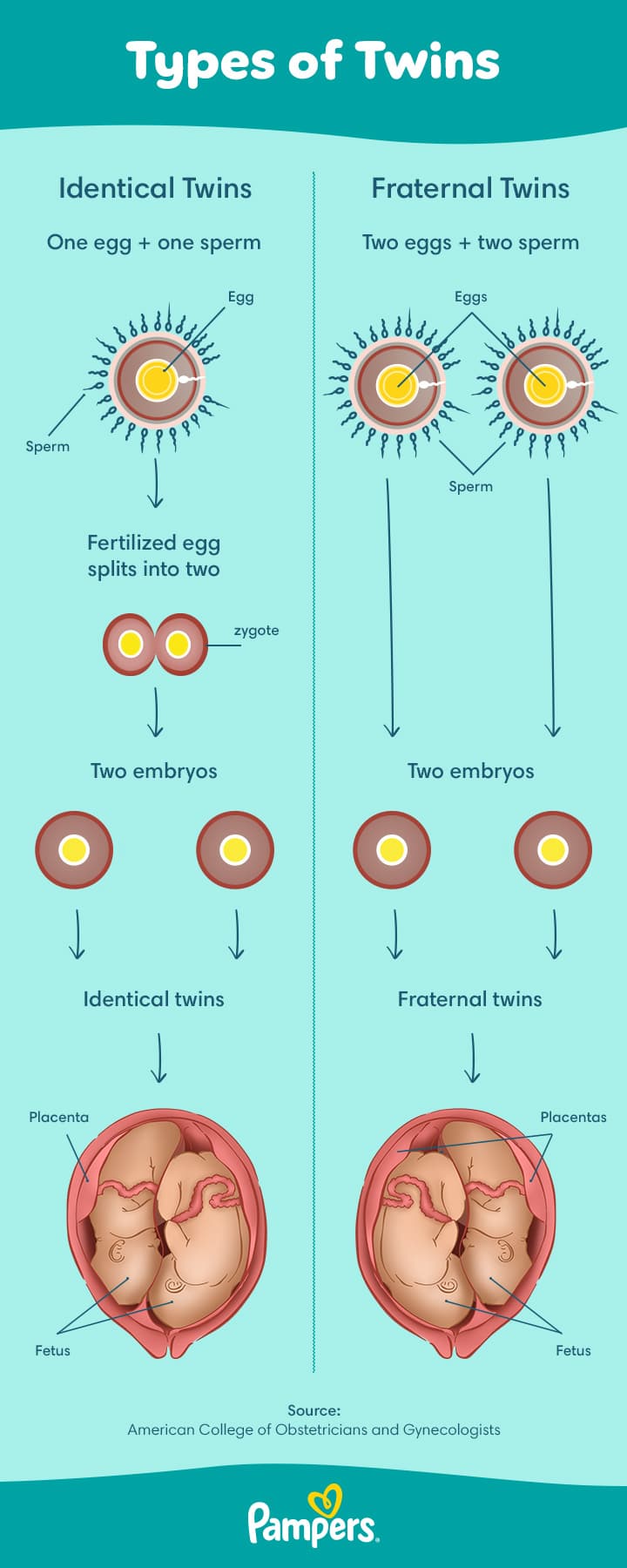
One fertilized egg splits into two embryos. Same DNA, almost always same sex. Roughly 1 in 250 pregnancies, with no significant heritable component.
Fraternal (dizygotic) twins
Two separate fertilized eggs. Different DNA, can be different sexes. About 2 in 100 pregnancies in the US, more in some populations and with assisted reproduction. Heritable on the maternal side.
The boundary isn't always clean. Some "identical" pairs have small genetic mosaicism. Some "fraternal" pairs look strikingly alike. DNA testing is the only definitive answer when it matters.
Where it actually matters#
1. Pregnancy monitoring
Your chorionicity (whether the babies share a placenta) is the medically relevant variable, not zygosity per se. But chorionicity correlates with zygosity:
- Fraternal twins: always dichorionic-diamniotic (DCDA). Two placentas, two sacs.
- Identical twins: ~1/3 DCDA, ~2/3 monochorionic-diamniotic (MCDA), rarely monochorionic-monoamniotic (MCMA).
MCDA and MCMA pregnancies need biweekly ultrasounds for TTTS monitoring. DCDA pregnancies don't. So if your twins are identical and monochorionic, the pregnancy is genuinely higher-acuity.
2. Mistaken identity in the early months
For identical twin parents, distinguishing two newborns who look almost the same is harder than expected. This sounds funny until you've sleep-fed the same baby twice in a row.
- Color-coded swaddles, hats, or socks. Pick one color per baby and stick with it for months.
- Take a clear photo of each baby weekly so memory anchors don't drift.
- Many twin parents paint one toenail a different color or use medical ID bracelets in the early weeks.
For fraternal twins. Even when same-sex. You can usually tell them apart within days. For identical twins, the visual fork happens around 4–6 months as facial structure individuates.
3. Identity and individuation
Identical twin parents face stronger external pressure to dress alike, name alike (Aiden and Jaden), and pair-coordinate. The pressure exists for fraternal twins too, but milder.
The research on individuation suggests:
- Distinct names with different starting letters.
- Separate clothing and possessions when possible.
- Some shared activities, some independent ones.
- Acknowledging similarity without making it the identity.
This isn't strictly an identical-only issue, but the pressure compounds for identical twins because the world treats them as a unit by default.
4. Comparison and developmental tracking
Twin parents will inevitably notice that one twin walks first, talks first, sleeps through first. The risk of comparative anxiety is real for both zygosities, but it spikes for identical twins because the genetic baseline is identical, so a difference must be developmental rather than genetic.
- Track each baby's milestones in their own log, not in a shared comparison column.
- Use the older-twin-by-minutes-only convention to avoid implicit ranking.
- Don't share comparison data with other parents at the playground. They will weaponize it accidentally.
5. Schools and class placement
This becomes relevant around age 4–5. Most school districts have a twin-placement policy: same class, separate classes, or parent choice.
- Same class: easier logistically, can reinforce twin-as-unit identity, sometimes leads to one twin shadowing the other.
- Separate classes: separate identities, harder logistics, more emotional adjustment in the first month.
- Parent choice: research increasingly favors letting parents decide based on the specific kids, not a blanket policy.
This decision is about personality, not zygosity. But identical twin parents face it more often because the school's default assumption is "they're a unit."
Where it doesn't matter#
- Sleep schedules. Identical or fraternal, they'll diverge or converge based on personality.
- Feeding patterns. Same.
- Day-to-day temperament. Twins of any zygosity have wildly different personalities.
- Long-term outcomes. There is no good evidence that identical twins have systematically different parenting needs from fraternal twins beyond the small list above.
A note on assumptions strangers will make#
- "They must be identical." Often said about same-sex fraternal twins.
- "Are they natural?" None of their business.
- "Which one is older?" Doesn't meaningfully matter.
- "Which one is the smart one?" Don't.
Most twin parents develop a polite deflection script by month 3. A short "they're twins" plus a smile plus a topic change works fine.
The actually-important thing#
The single most consistent finding from longitudinal twin studies: the parenting choices that matter. Sleep, feeding, individuation, school placement. Are barely affected by zygosity. They're affected by who your specific kids turn out to be.
So the practical advice for new twin parents is the same whether your twins are identical or fraternal: figure out who each kid is, parent each kid as themselves, and let the zygosity be a footnote.
Related reading#
FAQ
- Does it matter for parenting whether twins are identical or fraternal?
- Less than expected. Day to day, your twins differ because they are different people, not because of zygosity. The choices that matter (sleep, feeding, individuation, school placement) barely change. What genuinely diverges: pregnancy monitoring, early telling-apart, and how hard the world pushes the matching-set treatment.
- How do you tell identical twin newborns apart?
- Systems, not memory. Pick one color per baby and keep it for months (swaddles, hats, socks), take a clear photo of each weekly, and in the early weeks many parents paint one toenail or use ID bracelets. The visual fork usually arrives around 4 to 6 months as faces individuate.
- Are identical twin pregnancies higher risk?
- Often, via chorionicity. About two thirds of identical twins share a placenta (MCDA), which means biweekly ultrasounds for TTTS monitoring. Fraternal twins are always DCDA (two placentas, two sacs), the lowest-risk configuration. It is the placenta arrangement, not the DNA, that sets the monitoring schedule.
- Should twins be in the same class at school?
- It depends on the kids, not the zygosity. Same class is easier logistically but can reinforce twin-as-unit identity; separate classes build separate identities at the cost of a harder first month. Research increasingly favors letting parents decide per pair rather than blanket school policy.
Keep reading
Related guides
Survival
Should Twins Be in the Same Class or Separate? What the Research Says
Every twin parent faces this question by age 4 or 5. Schools often have a default policy. The research says the answer depends on your specific twins, not a blanket rule.
Sep 11, 2026
Survival
Twin Childcare: Daycare vs Nanny vs Nanny Share vs Au Pair
Childcare is the single largest twin expense. Here is what each option actually costs, when each makes sense, and the hidden costs most guides skip.
Sep 11, 2026
Survival
NICU Survival Guide for Twin Parents
About half of twins spend time in the NICU. It is scary, it is common, and it usually ends well. Here is what to expect, what to pack, and how to get through it.
Sep 11, 2026