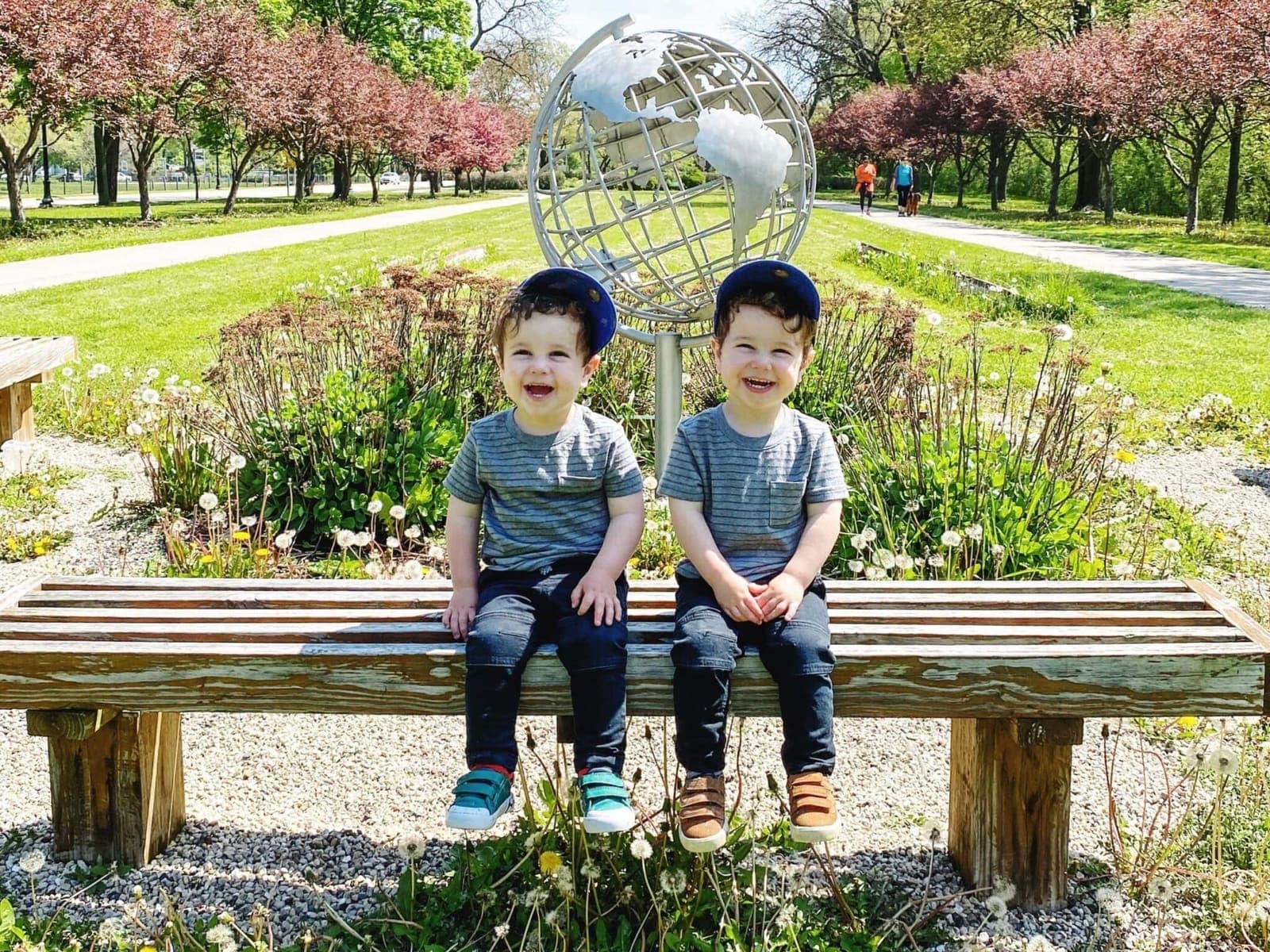
Dressing Twins Alike vs Building Individuality: What the Research Says
Matching outfits are adorable. But do they affect your twins' sense of self? Here is what the identity research actually says, and how to strike a practical balance.
Matching twin outfits are one of the first things people buy. They photograph well, they signal twinness to the world, and they bring genuine joy to many parents. But somewhere around month six, the question surfaces: is dressing them alike good for them?
The answer is more nuanced than the internet makes it. Here is what the research says, what it does not say, and a practical framework for twin parents who want to enjoy the matching phase without accidentally flattening their children's identities.
What the research actually finds#
Most of the relevant research comes from longitudinal twin studies in the UK, Netherlands, and Australia. The consistent findings:
- Matching clothing in infancy and toddlerhood has no measurable effect on identity development. Babies do not form self-concept from clothes. The concern is premature before age 3.
- From age 3 to 5, children start expressing clothing preferences. Honoring those preferences (even when they are mismatched or strange) correlates with stronger autonomy.
- Parents who dress identical twins alike past school age report more difficulty with outsiders distinguishing the children. Teachers, coaches, and peers default to treating them as a unit.
- The effect is not from the clothes themselves. It is from the social signal the clothes send: these two are interchangeable.
In short: matching outfits are harmless in the baby years, increasingly worth questioning from age 3 onward, and genuinely counterproductive if maintained through school against the twins' wishes.
Why matching feels so good (and that is okay)#
There is nothing wrong with enjoying matching outfits. Twin parenthood is hard, and the visual delight of coordinated babies is one of its genuine perks. A few honest reasons parents match:
- It is cute, full stop.
- It simplifies laundry and shopping. Buy two of the same, sort less.
- It makes twins visible in photos. Family shots read clearly when the twins match.
- It gives grandparents and gift-givers an easy target.
None of these reasons are harmful. The trouble starts only when matching becomes the default past the point where the children have opinions.
A practical framework by age#
0 to 12 months
Match freely if you enjoy it. Your babies do not care, and neither does the research. Color-coding (one baby always in green, the other in blue) is more practical than identical outfits because it helps visitors and caregivers tell them apart.
12 to 36 months
Coordinated but not identical works well here. Same color palette, different items. Or same outfit in different colors. This preserves the visual twin effect while starting to signal difference.
3 to 5 years
Let them choose. Offer options. If one twin wants the dinosaur shirt and the other wants stripes, celebrate that. If they both independently choose the same thing, that is fine too. The key word is independently.
School age and beyond
Follow the child. Most twins start asserting clothing preferences strongly by age 5 or 6. Some want to match for solidarity. Others want to be visually distinct. Both are healthy. Overriding either preference is where problems start.
The identity question underneath the clothes#
Clothing is a proxy for a bigger question: are you parenting two individuals or a unit? The answer should be both, in shifting proportions. In infancy, they are largely a unit (same schedule, same needs, same gear). By school age, they should be two people who happen to share a birthday.
Small moves that help, beyond clothing:
- Use their names, not "the twins," when talking about them.
- Celebrate individual interests, even when they diverge.
- Give each child some one-on-one time with each parent, even if it is just a 15-minute walk.
- Let them have separate friendships and separate activities when they want them.
What we would do#
Enjoy matching outfits in the baby year. Switch to coordinated-but-different around 18 months. Let them choose by age 3. And if they both choose the same dinosaur shirt at age 6, smile and move on. The goal is not to prevent matching. It is to make sure matching is their choice, not yours.
Related reading#
FAQ
- Is dressing twins alike bad for them?
- Not in the baby years. The research finds no measurable identity effect from matching clothes before age 3; babies do not build self-concept from outfits. The concern becomes real from age 3 onward, and matching maintained through school age against the twins' wishes is where it turns counterproductive.
- When should twins stop wearing matching outfits?
- Let the framework follow age: match freely from 0 to 12 months (color-coding is actually more practical than identical outfits), go coordinated-but-different from 12 to 36 months, and let them choose from age 3. By 5 or 6 most twins assert preferences, and both matching and not matching are healthy if it is their call.
- Does dressing identical twins alike cause problems at school?
- It can. Parents who keep identical twins matching past school age report that teachers, coaches, and peers default to treating the children as a unit. The issue is not the clothes but the social signal they send: these two are interchangeable. Distinct outfits make individual treatment easier.
- How do you build individuality in twins beyond clothing?
- Use their names instead of "the twins," celebrate diverging interests, give each child short one-on-one time with each parent (a 15-minute walk counts), and allow separate friendships and activities when they want them. Clothing is a proxy; the daily language and attention matter more.
Keep reading
Related guides
Survival
Should Twins Be in the Same Class or Separate? What the Research Says
Every twin parent faces this question by age 4 or 5. Schools often have a default policy. The research says the answer depends on your specific twins, not a blanket rule.
Sep 11, 2026
Survival
Twin Childcare: Daycare vs Nanny vs Nanny Share vs Au Pair
Childcare is the single largest twin expense. Here is what each option actually costs, when each makes sense, and the hidden costs most guides skip.
Sep 11, 2026
Survival
NICU Survival Guide for Twin Parents
About half of twins spend time in the NICU. It is scary, it is common, and it usually ends well. Here is what to expect, what to pack, and how to get through it.
Sep 11, 2026