How to Tell Twin Newborns Apart (Without Painting Toenails)
The five techniques that actually work in the first two weeks, and one that doesn't.
We're going to say something a lot of twin parents whisper but don't say out loud: in the first two weeks, especially with identical twins, you can't always tell them apart at a glance. This is normal. It is not a sign that you're a bad parent. The visual differences appear with time.
But you do need a system, especially during exhausting night-feeds when getting medication, feedings, or weight tracking confused matters. Here's what actually works.
Why this matters more than people expect#
Three reasons twin parents need a reliable system in the first two weeks:
- Pediatricians track each baby's weight gain separately. Mixing them up affects feeding and supply decisions.
- Medication doses (vitamin D, reflux meds, antibiotics) are per-baby. You don't want to give Baby A two doses and Baby B none.
- Sleep, feeding, and diaper logs are per-baby. Most twin parents we know use an app or a notebook. The data is only useful if it's correctly attributed.
Beyond logistics, there's also the bonding piece. Calling each baby by name with confidence helps both of you build the relationship. Even when you're not 100% sure, commit to your guess and check the wristband privately.
Hospital ID bracelets (and when they come off)#
The hospital wristbands are the gold standard. They have the baby's full name and your room number. Most hospitals put them on tightly enough that they stay for 7 to 14 days at home.
- Don't cut them off until you have a backup system in place.
- Check the wrist if there's any doubt. There's no shame in this.
- If a band falls off and you're sure of identity, replace it with a soft hair tie in a chosen color. If you're not sure, ask a partner or check your photos.
Color coding clothes#
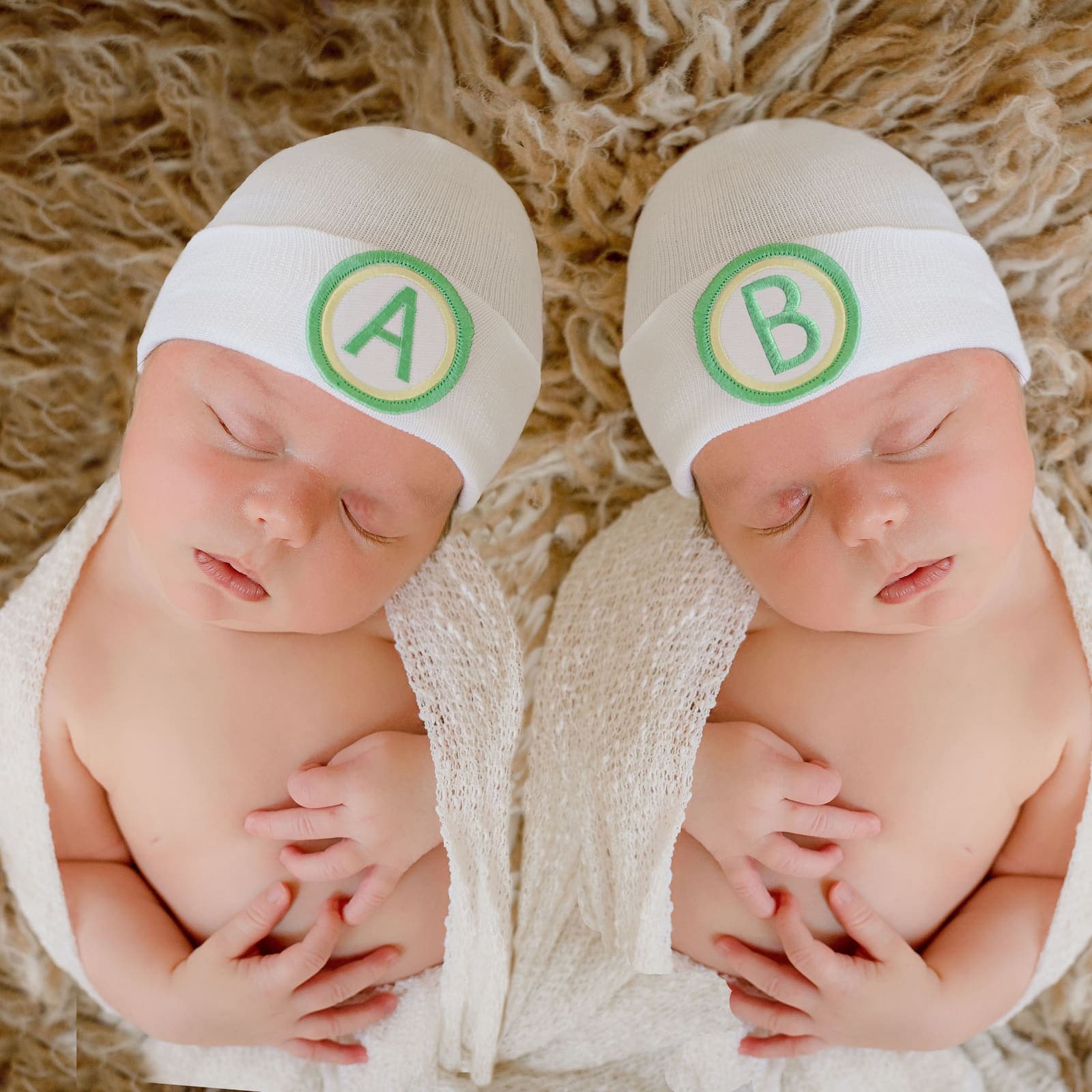
Pick a color per baby. Stick with it. Some twin parents use the rainbow approach (all warm colors for Baby A, all cool colors for Baby B); others use one specific color per baby (Baby A always wears yellow, Baby B always wears green).
- Onesies, sleepsuits, sleep sacks, hats, and socks all coded. Even when they're swaddled, you can see the foot color or hat color.
- Tell visitors and grandparents the system. They'll thank you.
- Brand-new clothes can be color-coded with a tiny embroidery thread or marker on the tag.
Birthmarks, weight, and natural cues#
Within two to three weeks, most twin parents start spotting natural differences:
- Birthmarks, even small ones, are reliable.
- Weight differences (often 200 to 500 grams between twins) translate to slightly different cheek fullness or arm thickness.
- Hair patterns (one swirl vs two, slightly different hairlines).
- Voice. Yes, even at two weeks, the cries sound subtly different.
Make a note of distinguishing features in your phone. "Baby A: small mole on left ankle. Baby B: birthmark on right shoulder blade." You'll stop needing the note within a month, but it'll save you in the first weeks.
Photos and the camera-roll method#
Take a photo of each baby labeled with their name on day one. Reference it when you're unsure. Most twin parents we know have done this, and most of them feel slightly silly about it. It works.
What we'd skip#
Toenail polish on newborns. We see this advice in older guides and we don't like it: nail polish on newborns has solvent exposure concerns and can chip into a swallowable size. Pediatric dermatologists generally don't recommend it.
Haircuts in the first month. Newborn hair is too fine to cut reliably and isn't a good identifier anyway.
What we'd do#
Keep the hospital wristbands on for the first 10 to 14 days. Color-code clothing from day one. Photograph each baby with a name label. Note one or two natural distinguishing features in your phone. By week three, most twin parents stop needing the system because their eyes have learned the babies. The whole project lasts about three weeks. Get through them and you'll never need this article again.
Related reading#
FAQ
- Is it normal to not be able to tell your twins apart?
- Yes, especially with identical twins in the first two weeks, and it does not make you a bad parent. The visual differences arrive with time: most parents stop needing any system by week three because their eyes have learned the babies. Until then, run a system and check the wristband without shame.
- What is the best system for telling newborn twins apart?
- Layered: keep the hospital wristbands on for the first 10 to 14 days, color-code all clothing from day one (one color per baby, including hats and socks visible through a swaddle), photograph each baby with a name label, and note one or two natural markers (a birthmark, a hair swirl) in your phone.
- Why does mixing up twins actually matter?
- Three reasons: pediatricians track each baby's weight gain separately and mix-ups distort feeding decisions, medication doses (vitamin D, reflux meds) are per baby, and feeding and diaper logs are only useful if correctly attributed. Beyond logistics, calling each baby by name with confidence helps bonding.
- Should you paint a toenail to tell twins apart?
- We would skip it. Nail polish on newborns carries solvent exposure concerns and can chip into swallowable pieces, and pediatric dermatologists generally do not recommend it. Color-coded clothing and a soft hair tie in a chosen color do the same job without the downsides.
Keep reading
Related guides
Survival
Should Twins Be in the Same Class or Separate? What the Research Says
Every twin parent faces this question by age 4 or 5. Schools often have a default policy. The research says the answer depends on your specific twins, not a blanket rule.
Sep 11, 2026
Survival
Twin Childcare: Daycare vs Nanny vs Nanny Share vs Au Pair
Childcare is the single largest twin expense. Here is what each option actually costs, when each makes sense, and the hidden costs most guides skip.
Sep 11, 2026
Survival
NICU Survival Guide for Twin Parents
About half of twins spend time in the NICU. It is scary, it is common, and it usually ends well. Here is what to expect, what to pack, and how to get through it.
Sep 11, 2026