How Much Formula Do Twins Go Through: A Month-by-Month Scoop Count
Formula-fed twins take roughly 40 to 64 ounces a day between them at peak, which works out to about 20 cans a month. The month-by-month math with low, typical, and high figures.
How much formula do twins go through? At the peak, roughly 60 ounces a day between the two of them, which is about 30 scoops a day and somewhere around 20 to 22 cans of the standard 12.4 ounce size per month. Everything below is an estimate built on stated assumptions, and your babies will not read the assumptions. Use it to size your registry, your subscription, and your pantry shelf, not to decide what your babies should eat. Amounts are a pediatrician question.
The assumptions, stated plainly#
- A common rule of thumb is about 2.5 ounces of formula per pound of body weight per day, topping out around 32 ounces a day per baby. We use that. Your pediatrician may give you different numbers, especially for preemie twins.
- Two babies, fed on a synced schedule, roughly the same size. If one twin is a pound heavier, they take a bit more. The total changes less than you would think.
- Standard powdered formula: one level scoop per 2 ounces of water. Scoop size varies by brand, so the can count is approximate. Read your can.
- A 12.4 ounce can of powder makes somewhere around 80 to 90 ounces of prepared formula. We use 85. The large tubs at roughly 30 ounces of powder make around 200 to 210 ounces.
- Estimates, all of it. We give a low, typical, and high figure for each stage. Low assumes smaller babies or some breast milk in the mix. High assumes big babies, growth spurts, and a bit of waste.
Weeks 1 to 4: the ramp#
Assume twins around 6 pounds each at the start, growing to around 8 pounds by the end of the month. The math: 2.5 ounces times 6 pounds is 15 ounces a day per baby, times two is 30 ounces a day. By week four, 2.5 times 8 is 20 ounces each, 40 for both. The first few days are smaller than any formula predicts, because newborn stomachs are tiny and many twins are sleepy eaters.
- Low: about 25 ounces a day between them, roughly 750 ounces for the month, around 9 cans.
- Typical: about 35 ounces a day, roughly 1,050 ounces for the month, around 12 to 13 cans.
- High: about 45 ounces a day, roughly 1,350 ounces, around 16 cans.
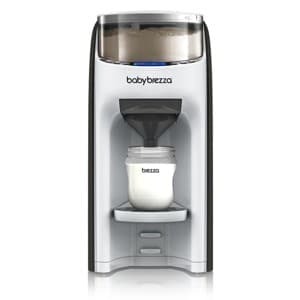
Scoops: 35 ounces a day is 17 to 18 scoops. That is the number that makes a formula pitcher or a machine start to look reasonable. Our pitcher versus Baby Brezza comparison does that math.
Months 2 to 3: the climb#
Assume 9 to 12 pounds each. At 10 pounds, 2.5 times 10 is 25 ounces a day per baby, 50 for two. By 12 pounds you are at 30 each, 60 for two, and close to the cap.
- Low: 45 ounces a day, around 1,350 a month, around 16 cans.
- Typical: 55 ounces a day, around 1,650 a month, around 19 to 20 cans.
- High: 64 ounces a day (both at the cap), around 1,900 a month, around 22 to 23 cans.
Scoops: 55 ounces a day is 27 to 28 scoops, or a shade under 850 scoops a month. Nobody counts them at that point, which is the point of a pitcher.
Months 4 to 6: the plateau#
Both babies are usually at or near the 32 ounce cap and stay there. This is the most expensive stretch, and the one to plan a subscription around.
- Low: 50 ounces a day, around 1,500 a month, around 18 cans.
- Typical: 60 ounces a day, around 1,800 a month, around 21 cans, or about 9 of the big tubs.
- High: 64 ounces a day, around 1,900 a month, around 22 to 23 cans.
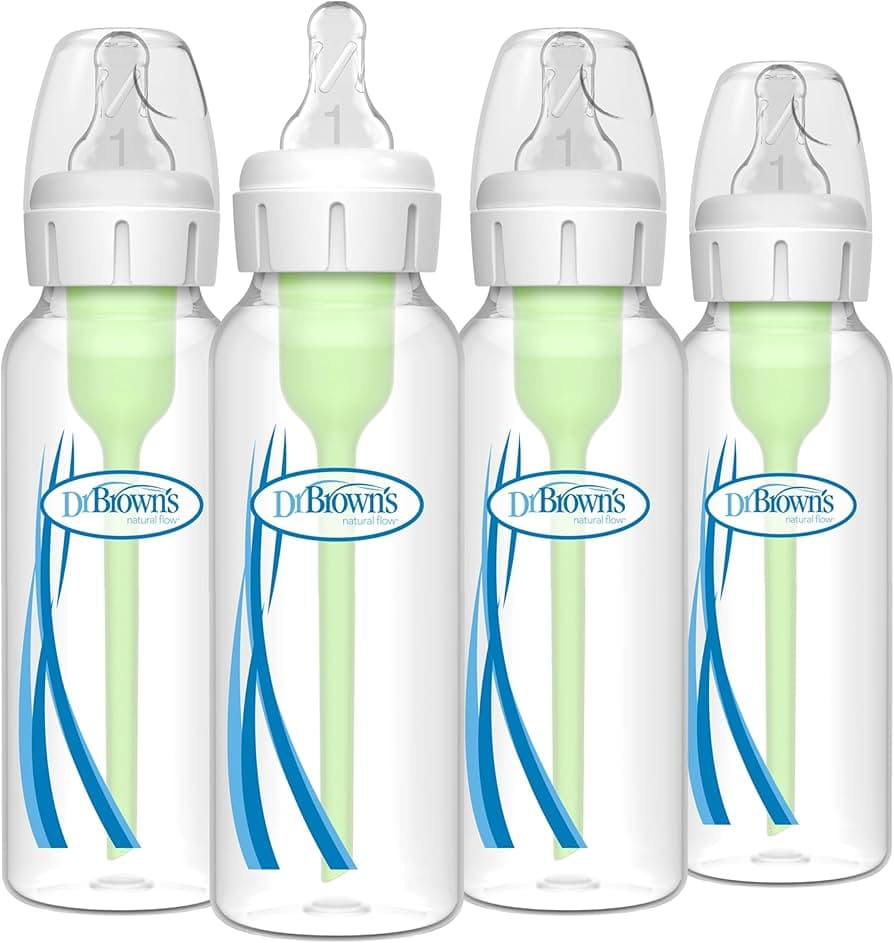
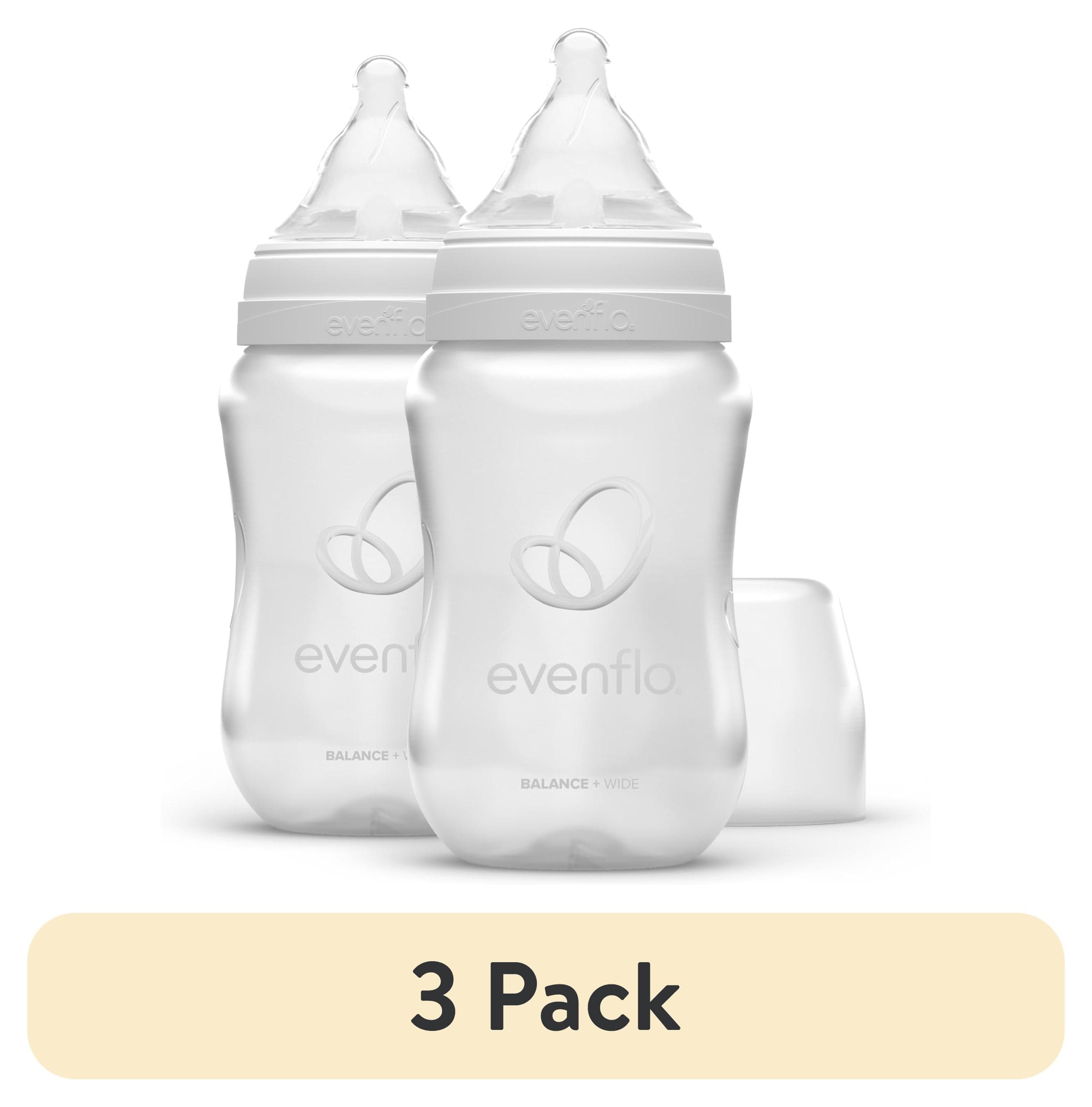
Bottle size changes here. Eight ounce bottles like the Dr. Brown's Natural Flow Options+ or the Evenflo Balance+ Wide replace the 4 ounce ones, and each feed is 6 to 8 ounces per baby, five or six times a day.
Months 7 to 12: the slow decline#
Solids start around six months and take over slowly. Formula drops from about 30 ounces a day per baby to somewhere around 16 to 24 ounces by the first birthday, depending on how enthusiastically your twins eat food. We assume a steady decline.
- Months 7 to 8, typical: around 52 ounces a day for both, 1,550 a month, around 18 cans.
- Months 9 to 10, typical: around 44 ounces a day, 1,300 a month, around 15 cans.
- Months 11 to 12, typical: around 36 ounces a day, 1,100 a month, around 13 cans.
One twin often drops formula faster than the other. That is normal, and it is a pediatrician conversation if the gap gets large. For buying purposes, it just means the last few months land lower than a straight line predicts.
The first-year total, and how to buy it#
Add it up and typical formula-fed twins take somewhere around 17,000 to 19,000 ounces of prepared formula in year one. At 85 ounces per can, that is roughly 200 to 225 standard cans, or around 85 to 95 big tubs.
- Low, with combination feeding or small babies: around 12,000 ounces, roughly 140 cans.
- Typical: around 18,000 ounces, roughly 210 cans.
- High, big babies and full formula from day one: around 21,000 ounces, roughly 250 cans.
Cost depends on the brand more than anything. Store-brand tubs bring the year well under what name-brand cans cost, and the ingredient lists are worth a look before you assume the expensive one is better. Whatever you pick, sign up for a subscription once the babies are settled on it, and check for multiples discounts from the manufacturer. Our twin discounts roundup lists the ones that exist.
- Do not buy more than two to three weeks ahead in month one. Babies change formula, pediatricians change formula, and a shelf of the wrong brand is not returnable.
- Once you are stable, keep a rolling four-week supply. Twins mean a formula shortage hits you twice as fast.
- Sixteen to thirty scoops a day is where a Baby Brezza Formula Pro Advanced at around $200 or a $15 pitcher pays for itself in minutes, not money. Our decision page on formula machines has the twin math.
- Buy bottles in the small size sparingly and the big size generously. Twins skip past 4 ounce bottles fast.
What we'd do#
Plan on about 20 cans a month from month two through month six, sign up for a subscription in month two, and size the pantry shelf to a rolling month. Prep in a pitcher or a machine from the first week the total crosses 15 scoops a day. And keep the numbers above as estimates on a fridge note, not a target. Your pediatrician sets the target. You just have to keep the shelf stocked.
Related reading#
The verdicts behind this guide
Mentioned in this guide
Featured picks
Some buy links earn us a small cut, at no extra cost to you. We still recommend skipping plenty of things, so it balances out.
FAQ
- How many ounces of formula do twins drink per day?
- Using the common rule of thumb of about 2.5 ounces per pound of body weight per day, capped near 32 ounces per baby, twins take roughly 30 to 40 ounces a day between them in the first month, 50 to 60 by month three, and 55 to 64 through month six before solids bring it down. These are estimates. Your pediatrician sets the actual amounts.
- How many cans of formula do twins go through in a month?
- At the peak, months four through six, typical formula-fed twins use around 1,800 ounces of prepared formula a month. A standard 12.4 ounce can makes roughly 85 ounces, so that is about 21 cans, or around 9 of the big tubs. Month one is closer to 12 or 13 cans, and the count tapers after solids start.
- How much formula do twins use in the first year in total?
- Our typical estimate is around 18,000 ounces of prepared formula, roughly 210 standard cans. Low, with combination feeding or small babies, is around 140 cans. High, with big babies on full formula from day one, is around 250 cans. Brand choice moves the cost more than baby size does, so compare store-brand tubs before assuming.
- Should twin parents stockpile formula?
- Not in month one. Babies and pediatricians change formulas, and a shelf of the wrong brand is not returnable. Once the twins are settled on a brand, keep a rolling four-week supply on a subscription. Twins hit a shortage twice as fast, so four weeks of buffer is sensible. Twelve weeks of buffer is a closet you cannot use.
Keep reading
Related guides
Registry
Twin Discounts, Freebies, and Bulk Deals Worth Knowing
Every discount program, manufacturer freebie, and bulk deal that actually saves twin parents real money. No expired coupon codes, no affiliate tricks.
Sep 8, 2026
Registry
Twin Gear Resale Guide: What Holds Value and Where to Sell
Some twin gear holds 60% of its value after a year. Some is worth nothing. Here is what to sell, where to sell it, and how to price twin gear for a fast sale.
Sep 7, 2026
Registry
Building Your Twin Hand-Me-Down Network: Multiples Clubs and Consignment Sales
Twin gear is expensive new and almost free used. Here is how to find local multiples clubs, consignment sales, and the informal networks where twin parents trade gear in bulk.
Sep 7, 2026