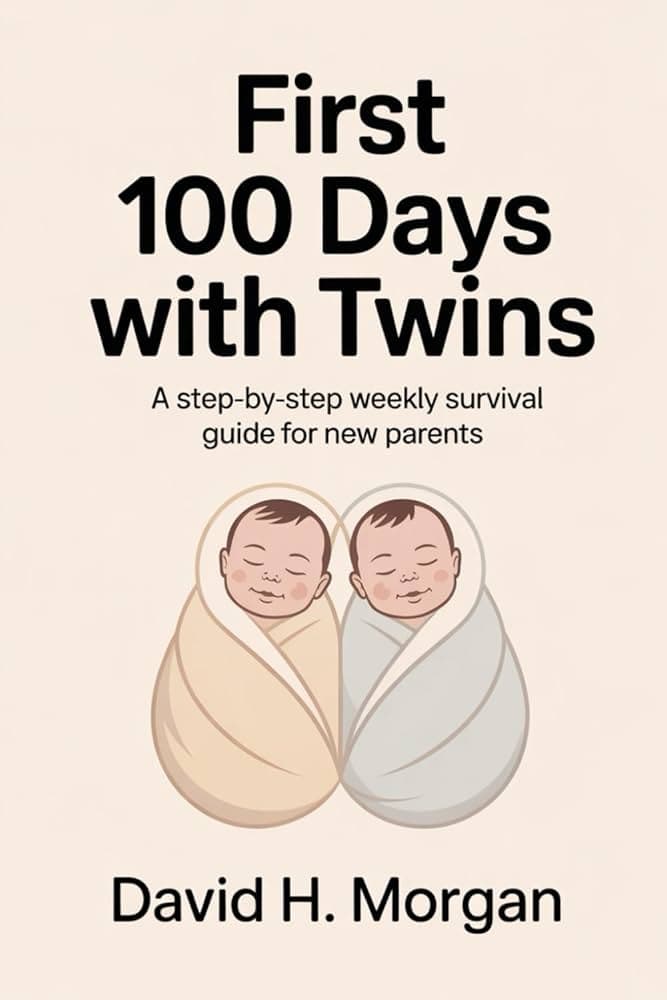
The First 100 Days With Twins: A Survival Plan
A phased survival plan for the first 100 days with twins. Triage in week 1, the feeding loop in months 1–2, and the first signs of personhood by week 12.
Most “first 100 days” guides are written for one baby. Twin first-100-days are mathematically different: more wakeups, more bottles, more laundry, less sleep. Here's a phased plan that actually fits twin parent reality.
Days 1–14: triage, not parenting#
The first two weeks are about keeping all four humans alive. Two adults, two newborns. Forget routines, forget development, forget the books.
What matters:
- Three-person nights, when possible. A partner, a parent, a friend. One person feeds, one rests. Rotate.
- One feeding station in the main room, fully stocked: bottles, formula or pump, burp cloths, water, snacks, a phone charger.
- Don't decline help. People offer in week one and disappear by week three. Take everything in week one.
- Lower the bar. If both babies are fed, both are clean, and you've slept four hours, that day was a win.
Days 15–60: the feeding loop#
Feeding dominates. Twin newborns eat every 2–3 hours, and unsynchronized twins effectively eat continuously. The single biggest move in this phase is feeding both at once.
Tools that help
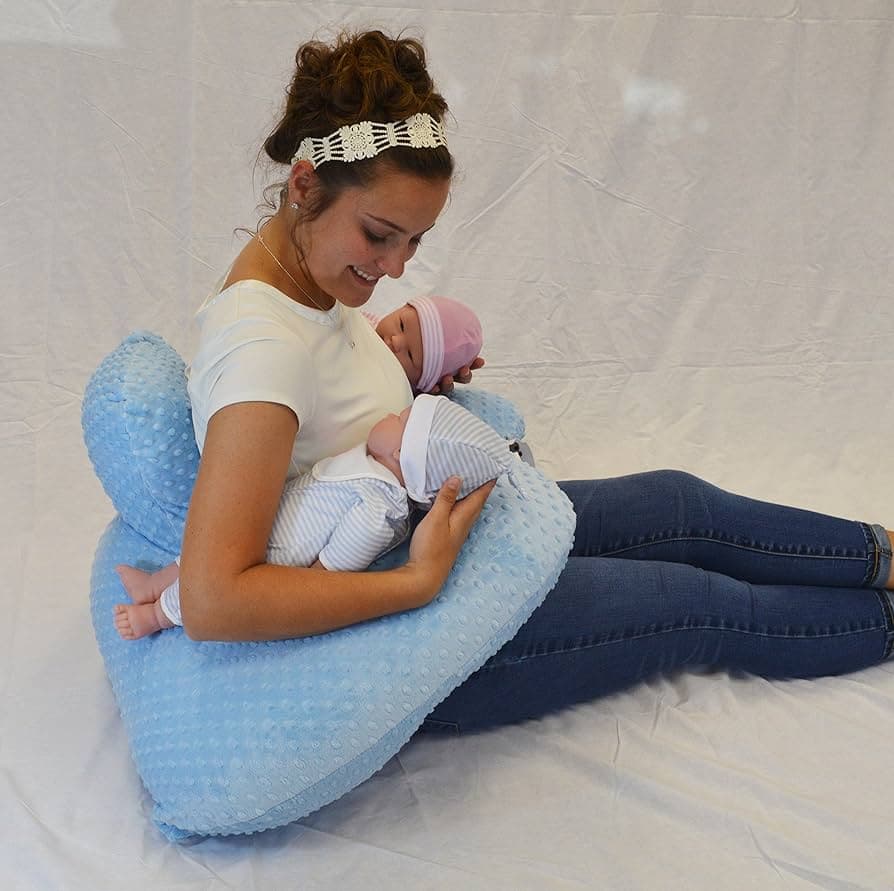
- A twin-shaped nursing pillow (Twin Z, My Brest Friend Twins) for tandem breastfeeding.
- Two bottle propping pillows. With adult supervision; never unsupervised.
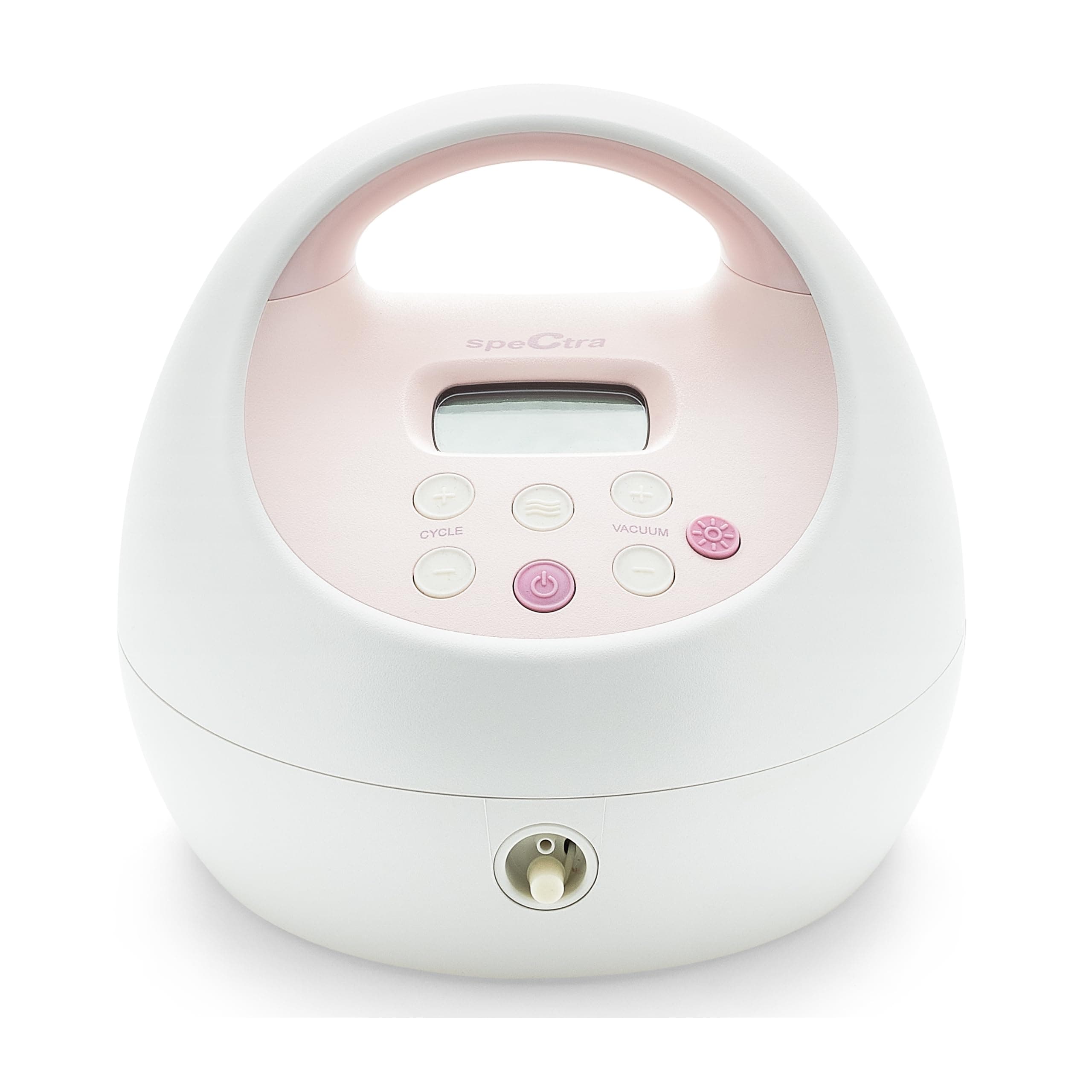
- A double electric breast pump, used while one baby is bottle-fed.
- Pre-measured formula containers for night feeds.
What stops working
- Feeding on demand for two unsynced babies. Exhaustion compounds. Most twin parents end up gently waking the second baby to feed alongside the first within 2–3 weeks.
Days 61–100: the first signs of personhood#
Around week 8–10 your twins start smiling, tracking, and making eye contact. They sleep slightly longer stretches. The fog lifts.
What to add
- A tummy time routine, 5–10 minutes per baby, twice a day.
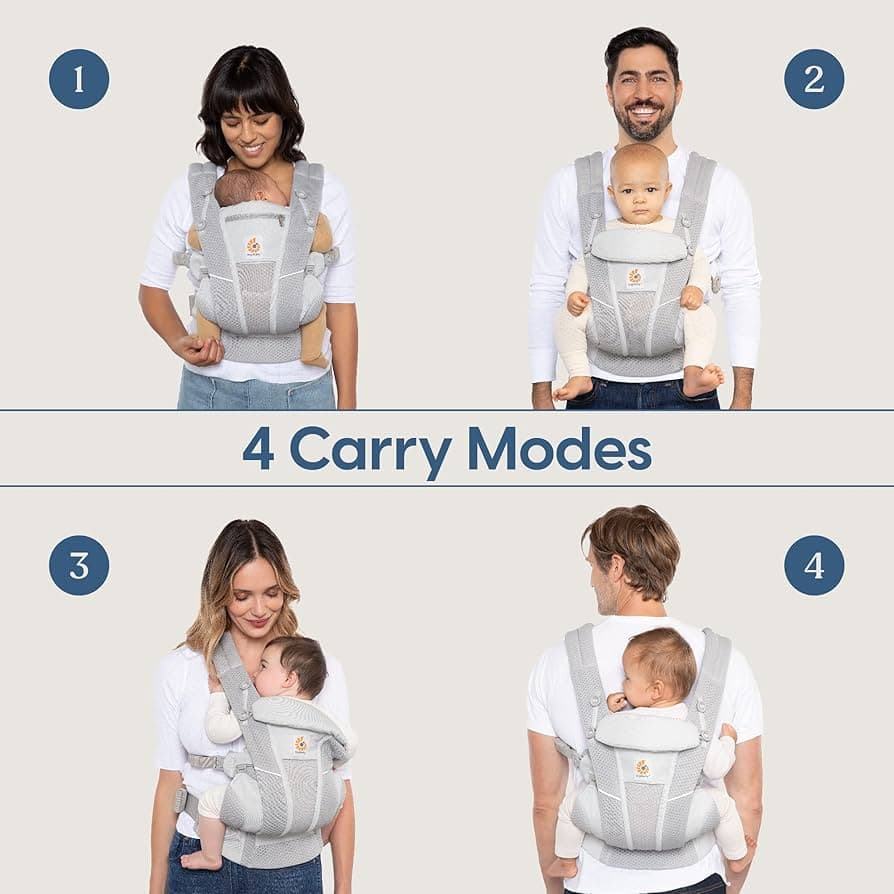
- One outing a day, even if it's just the lobby. Stroller logistics get easier with practice.
- Separate tracking for each baby's wet/dirty diapers. The “twin merge”. losing track of who fed when. Is real and reduces with checklists.
What to defer
- Sleep training. Most pediatric guidance is 4–6 months. Twin sleep training is its own essay.
- Solid foods. Not until 6 months by AAP guidance.
- Comparison. Twin development diverges; one rolls first, one talks first. Tracking ratios is fine; ranking babies isn't.
What helped, what didn't#
What helped (from real twin parents):
- Hiring a postpartum doula 2–3 nights a week for the first month. Expensive but transformative.
- Joining a local twin parents group for peer reality-checks.
- Saying yes to meal trains.
What didn't help:
- “Sleep when the baby sleeps.” With twins, one is always awake. This advice is structurally wrong.
- Reading single-baby sleep books and trying to apply them.
- Ambition. Day one is not the day to start a side project.
The first 100 days with twins are survivable, but only if you accept that survival, not optimization, is the goal.
Related reading#
Mentioned in this guide
Featured picks
Some buy links earn us a small cut, at no extra cost to you. We still recommend skipping plenty of things, so it balances out.
FAQ
- How do you survive the first weeks with newborn twins?
- Treat days 1 to 14 as triage, not parenting. Keep all four humans fed and rested, forget routines and books. Run three-person nights when possible (one feeds, one rests, rotate), stock one feeding station in the main room, and take every offer of help in week one, because helpers disappear by week three.
- Should you feed twins at the same time?
- Yes, and it is the single biggest move of months one and two. Twin newborns eat every 2 to 3 hours, and unsynchronized twins effectively eat continuously. Feeding both at once, with a twin nursing pillow or supervised bottle setup, is what turns 30-minute sleep scraps into real blocks.
- Does "sleep when the baby sleeps" work with twins?
- No. With twins, one is always awake, so the advice is structurally wrong. What actually helps: a postpartum doula a few nights a week in month one if you can afford it, meal trains, a local twin-parent group, and lowering the bar. Fed, clean, four hours of sleep counts as a win.
- When does it get easier with twins?
- Around weeks 8 to 12. The babies start smiling, tracking, and sleeping slightly longer stretches, and the fog lifts. That is when to add a short tummy time routine and one outing a day, and still defer sleep training (4 to 6 months by most pediatric guidance) and solids (6 months).
Keep reading
Related guides
Survival
Should Twins Be in the Same Class or Separate? What the Research Says
Every twin parent faces this question by age 4 or 5. Schools often have a default policy. The research says the answer depends on your specific twins, not a blanket rule.
Sep 11, 2026
Survival
Twin Childcare: Daycare vs Nanny vs Nanny Share vs Au Pair
Childcare is the single largest twin expense. Here is what each option actually costs, when each makes sense, and the hidden costs most guides skip.
Sep 11, 2026
Survival
NICU Survival Guide for Twin Parents
About half of twins spend time in the NICU. It is scary, it is common, and it usually ends well. Here is what to expect, what to pack, and how to get through it.
Sep 11, 2026