Sterilizing at Twin Volume Without Losing Your Evenings
Twelve to sixteen bottles a day makes sterilizing a real chore. Which methods keep up (dishwasher, steam, boiling), when you can stop, and the batch routine that takes twenty minutes a night.
How do you sterilize bottles for twins without it eating every evening? Wash everything once a day in one batch, sanitize the whole batch in one run, dry it on one big rack, and pick bottles with fewer parts. Twelve to sixteen bottles a day is the volume that makes the method matter. Boiling one pot at a time was fine for one baby. For two it is an hour a night at the stove, and that hour is the difference between sleeping and not.
Sterilize, sanitize, or just wash: what is actually required#
The words get used loosely. Washing with hot soapy water and a bottle brush after every feed is always required. Sanitizing (steam, a dishwasher sanitize cycle, boiling) kills more of what washing leaves behind. Most guidance says to sanitize bottle parts at least once a day for babies under about 3 months, for premature babies, and for babies with a weakened immune system, and that after that a thorough wash and full air dry is enough for healthy babies. Twins are often early and often small, so ask your pediatrician when yours can move to wash-only. Until then, plan for a daily sanitize run and build the routine around one run, not many.
The methods, compared at twin volume#
- Dishwasher with a sanitize cycle: the twin winner if you have one. Bottles, nipples, and rings go in a basket on the top rack, one run at night, done. Most bottles are dishwasher-safe on the top rack, but check the box. Capacity is the whole day's bottles plus pump parts in one go. Time from you: five minutes of loading.
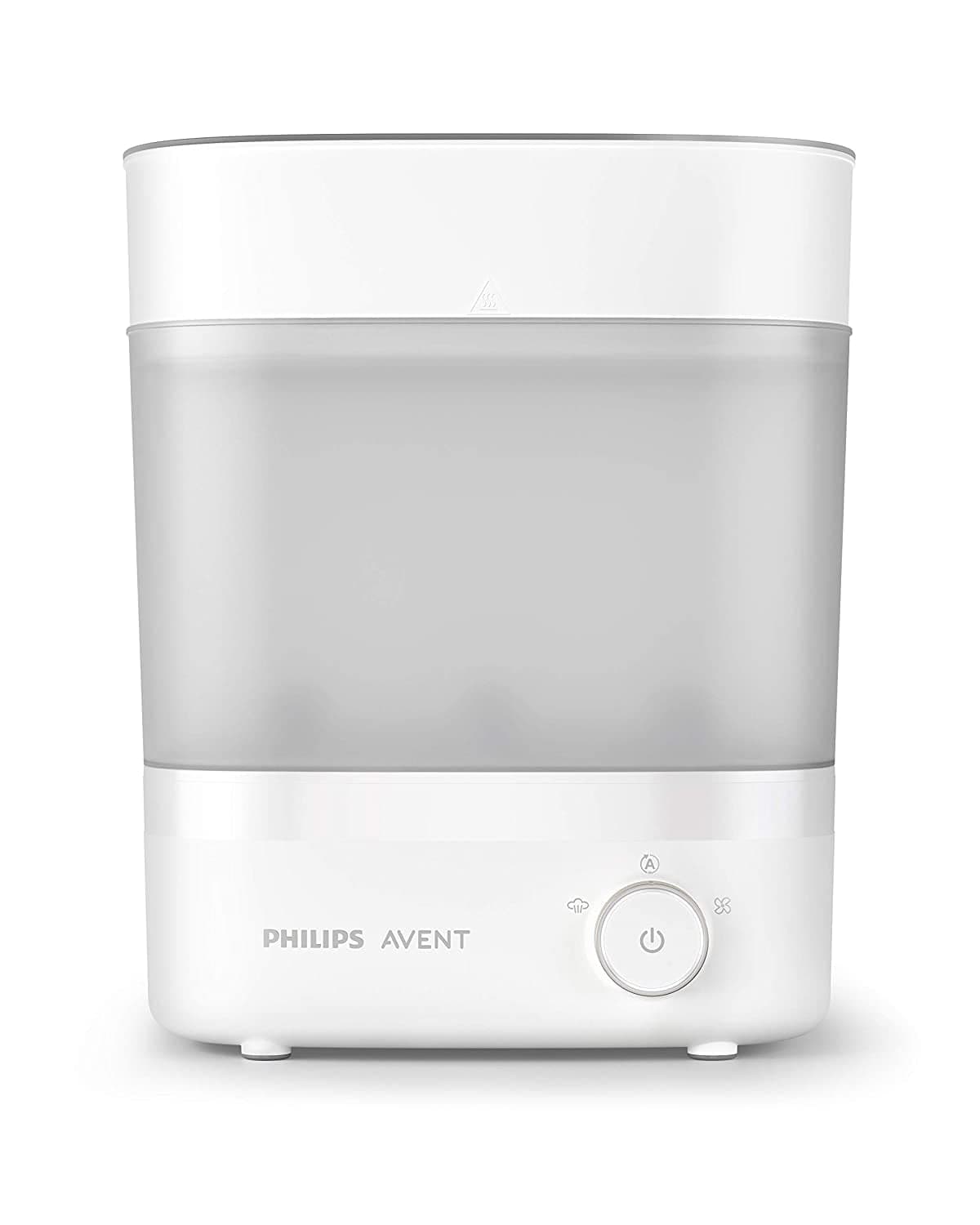
- Electric steam sterilizer: the Philips Avent Electric Steam Sterilizer at around $80 takes six bottles plus parts per run. At twin volume that is two or three runs a night, each around ten minutes, and the bottles stay sanitized inside with the lid closed. Good if there is no dishwasher. Buy one, not two. Two on a counter is a kitchen you cannot cook in.
- Microwave steam bags: cheap, about four bottles a bag, a few minutes each. Fine for travel and for the grandparents' house. As a nightly method for 12 bottles it is four cycles of standing at the microwave.
- Boiling: free, and a big stockpot does six to eight bottles at once. It is also the slowest and the most annoying, and soft silicone nipples wear faster. Our verdict for twins is to use it as the backup, not the plan.
- UV cabinets: the $150 to $300 countertop boxes sanitize and dry. They are large, slow per cycle, and hold about a day of one baby's bottles. At twin volume we would skip them unless a dishwasher is impossible and counter space is not.
The once-a-night routine#
The thing that saves evenings is not the appliance. It is doing the whole day in one batch instead of drips and drabs. The routine that works for us:
- After each feed, rinse the bottle and drop it in a wash bin under the sink. Rinsed milk does not dry into a film. That is the only during-the-day task.
- After the 9pm feed, wash the bin: hot soapy water, a bottle brush, a nipple brush, one pass through everything. Fifteen minutes for 12 to 16 bottles once you are practiced.
- Sanitize in one run. Dishwasher sanitize cycle, or two or three steam runs while you do something else.
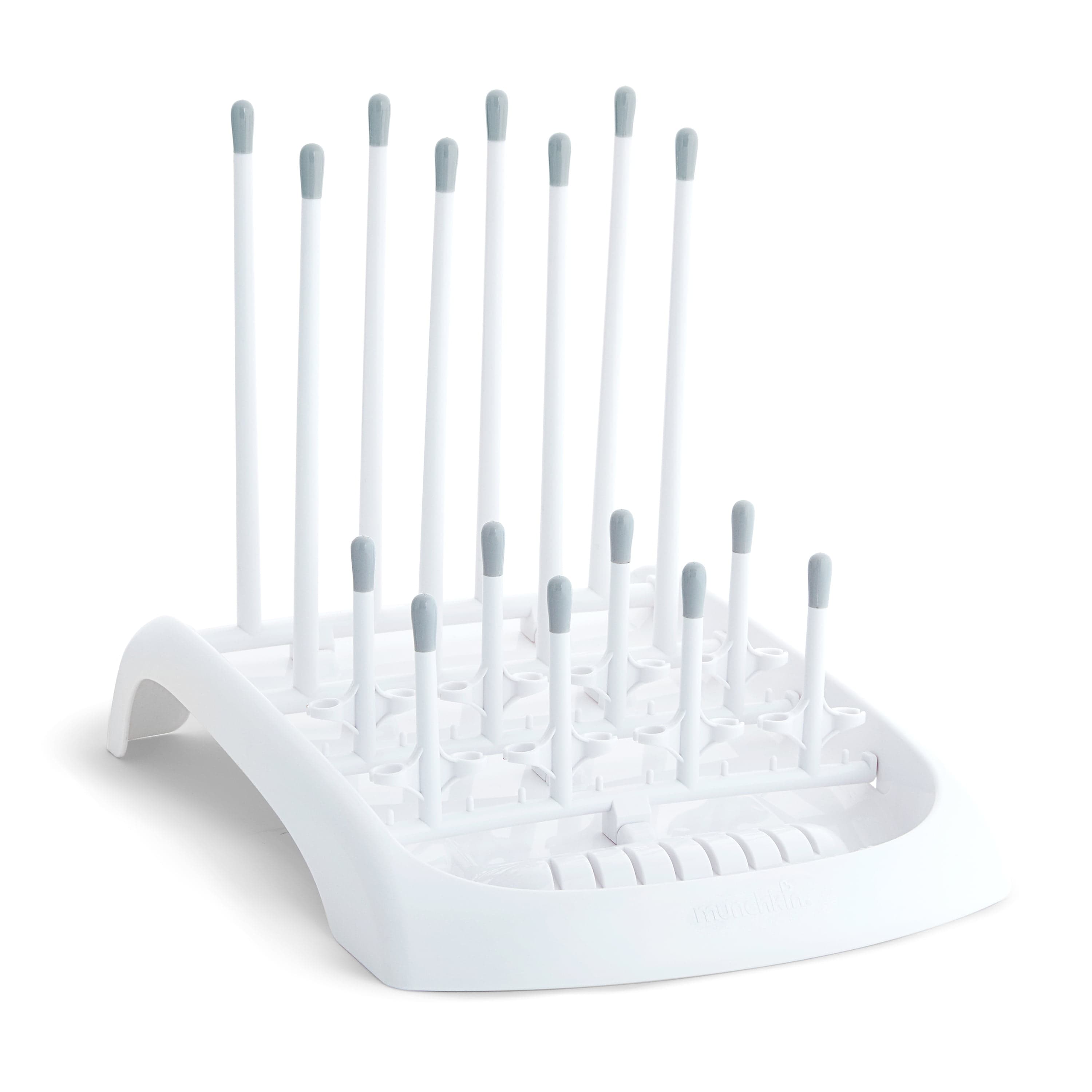
- Dry on a big rack. The Boon Lawn at around $25 holds a twin day's worth of bottles. The Munchkin Deluxe Drying Rack at around $25 does the same with slots for parts. Full air drying matters as much as sanitizing. Damp bottles capped in a cupboard is the thing everyone warns about.
- Assemble in the morning, not at night. Assembled bottles trap moisture. Loose parts on a rack dry overnight.
- Pump parts go through the same batch. Three sets of parts means the pumping day and the bottle day share one wash.
Fewer parts, fewer minutes#
Bottle choice is a sterilizing decision at twin volume. Count the pieces, then multiply by twelve.
- Dr. Brown's Natural Flow Options+ at around $25 for a 4-pack: bottle, nipple, collar, cap, vent insert, vent reservoir. Six pieces. Twelve bottles is around 70 pieces a night. Some babies genuinely do better on them, and if yours do, the parts are the price. If not, this is the brand we would not choose for twins.
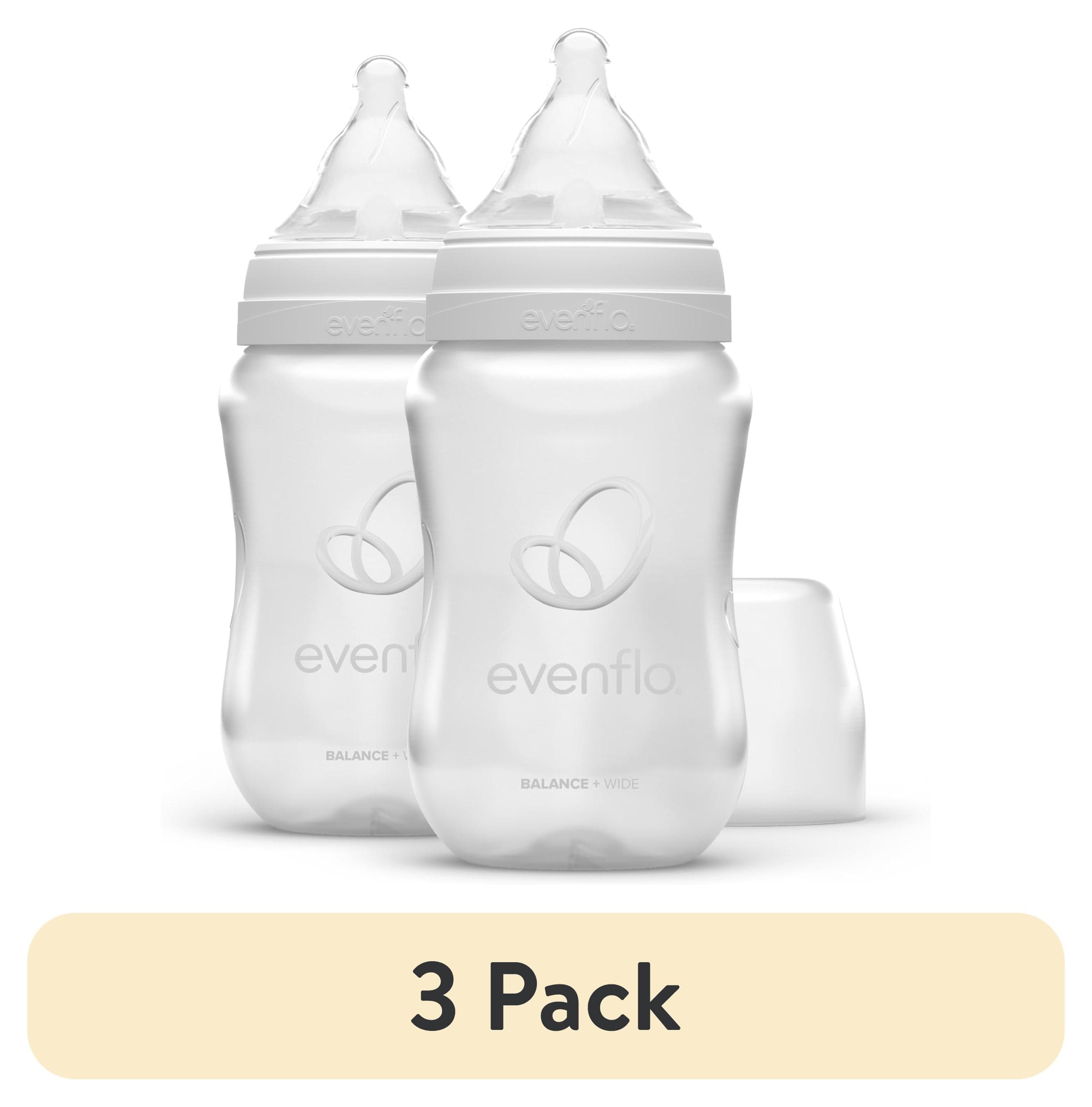
- Evenflo Balance+ Wide at around $20 for a 4-pack: bottle, nipple, collar, cap. Four pieces, and wide enough to brush fast. Our default.
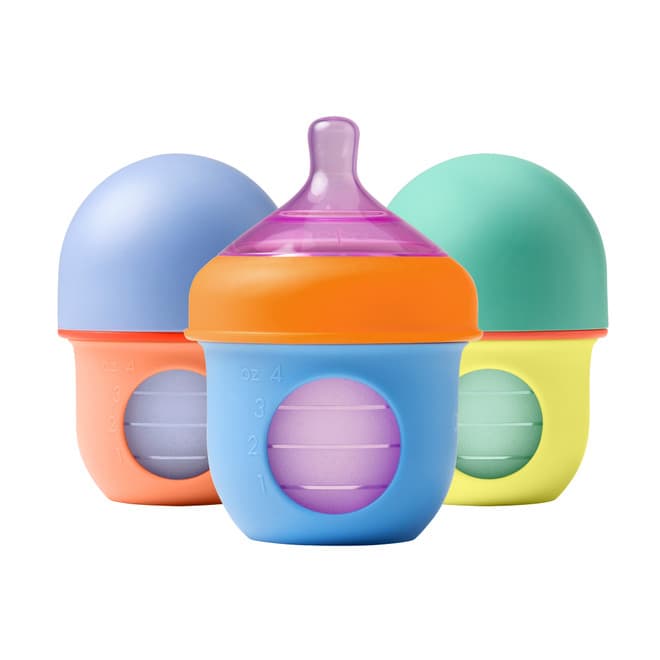
- Boon Nursh Silicone at around $25 for a 3-pack: a collapsible pouch inside a shell, so there is no vent to scrub. Fewer parts, slightly odd to fill.
- The Kiinde Twist Pouch System at around $50 for the starter kit: for pumped milk, the pouch is disposable, so the nightly wash is nipples, collars, and pump parts only. At twin volume it cuts the batch roughly in half.
Water, brushes, and the things people over-worry#
- If you are using powdered formula, the water question (boiled and cooled, or straight from the tap) is a pediatrician and local water question, not a sterilizer question. Ask once, then stop thinking about it.
- The sink, the bin, and the brushes get washed too. Replace brushes every month or so. Two brushes, because one is always wet.
- Nipples wear out. At twin volume, check them monthly and replace at the first crack or cloudiness. A pack of spares in the drawer is cheaper than a 3am nipple hunt.
- You do not need a dedicated bottle soap, a bottle-only dish towel, or a second sterilizer for the nursery. One sink, one rack, one run.
When you can stop#
For healthy full-term twins past about 3 months, most guidance lets you drop daily sanitizing and rely on washing and full drying. Confirm with your pediatrician, and ask specifically about preemies and corrected age. When you get the go-ahead, the routine barely changes: the nightly wash stays, the sanitize run goes, and the rack still does the drying. The dishwasher keeps running because it was always the easiest option.
What we'd do#
If there is a dishwasher, buy a basket and run the sanitize cycle once a night. If there is not, buy one Philips Avent electric steam sterilizer, one Boon Lawn, two brushes, and twelve four-piece bottles. Rinse during the day, wash once at night, dry loose, assemble in the morning. Ask the pediatrician when daily sanitizing can stop, and stop. The evenings are for sitting down.
Related reading#
The verdicts behind this guide
Mentioned in this guide
Featured picks

Some buy links earn us a small cut, at no extra cost to you. We still recommend skipping plenty of things, so it balances out.
FAQ
- Do you need to sterilize bottles every day for twins?
- Most guidance says to sanitize bottle parts at least once a day for babies under about 3 months, for preemies, and for babies with a weakened immune system, then wash and fully air dry after that. Twins are often early and small, so ask your pediatrician when yours can move to wash-only, and use corrected age in that conversation.
- What is the fastest way to sterilize 12 bottles a night?
- A dishwasher with a sanitize cycle, with the parts in a basket on the top rack, one run after the last evening feed. Without a dishwasher, an electric steam sterilizer like the Philips Avent does six bottles plus parts in about ten minutes, so two or three runs. Either way, wash the whole day in one batch and dry loose on a big rack.
- Is a UV sterilizer worth it for twins?
- Not in our view. The countertop UV boxes run around $150 to $300, take a long cycle, and hold about a day of one baby's bottles, so twin volume means multiple runs anyway. A dishwasher or an $80 steam sterilizer does the job faster. Put the difference toward a second set of bottles or pump parts.
- Which bottles are easiest to sterilize at twin volume?
- The ones with the fewest pieces. Evenflo Balance+ Wide is four pieces per bottle. Dr. Brown's Options+ is six, which at twelve bottles is around 70 pieces a night. Boon Nursh has no vent to scrub. For pumped milk the Kiinde pouch system makes the pouch disposable, so the nightly wash is only nipples, collars, and pump parts.
Keep reading
Related guides
Gear Guides
UPPAbaby Vista V2 vs Baby Jogger City Select 2 for Twins
Both are inline twin strollers that clear an apartment door. The Vista is nicer to push, fold, and resell. The City Select 2 gives twins two equal seats for less money.
Sep 12, 2026
Gear Guides
Best Twin Bassinets for a Shared Bedroom
Bedside bassinets, dual bassinets, and what fits when you and the babies share a room for the first six months.
Sep 12, 2026
Gear Guides
Bugaboo Donkey 5 Twin vs UPPAbaby Vista V2: Side-by-Side or Inline
The Donkey puts twins next to each other in equal seats at about 28 inches wide. The Vista stacks them at about 26 inches for far less money. Doorways and budget decide it.
Sep 11, 2026